
Imagine waking up every morning with a glowing, radiant complexion. Sounds dreamy, right?
The secret to achieving this lies in a simple yet powerful nightly skin care routine. By dedicating just a few minutes each evening to your skin, you can transform your complexion and boost your confidence. This guide will walk you through easy steps to nourish and rejuvenate your skin while you sleep.
Ready to discover the secret to waking up with flawless skin? Let’s dive in and unlock the potential of your nightly ritual. Your skin will thank you!
Credit: medium.com
Benefits Of A Nightly Routine
Building a nightly skin care routine offers more than just a moment of self-care before bed. It sets the stage for your skin to heal, renew, and strengthen while you sleep. Have you ever wondered why your skin sometimes feels dull or tired in the morning? The right routine can change that.
Skin Repair During Sleep
Your skin works hard to fix daily damage while you rest. Nighttime is when cell turnover increases, helping to replace dead skin cells with fresh ones. Using products with ingredients like retinol or peptides at night supports this natural repair process.
Think about your own experience: have you noticed your skin looking better after a good night’s sleep? That’s your skin repairing itself, boosted by the right care.
Long-term Glow Enhancement
Consistency in your nightly routine builds a lasting glow over time. Moisturizers and serums applied at night help maintain hydration and improve texture. Over weeks, you’ll see skin that feels smoother and looks more radiant.
Ask yourself: does your skin look tired or vibrant by the end of the week? A solid nightly routine can be the difference.
Preventing Early Aging
Night care plays a crucial role in fighting early signs of aging. Antioxidants and nourishing ingredients protect skin from free radicals and environmental stress accumulated during the day. This reduces fine lines and keeps your skin firmer longer.
Have you ever caught yourself wondering if aging signs could be slowed down? Starting a nightly routine today can help you take control of your skin’s future.
Essential Nightly Steps
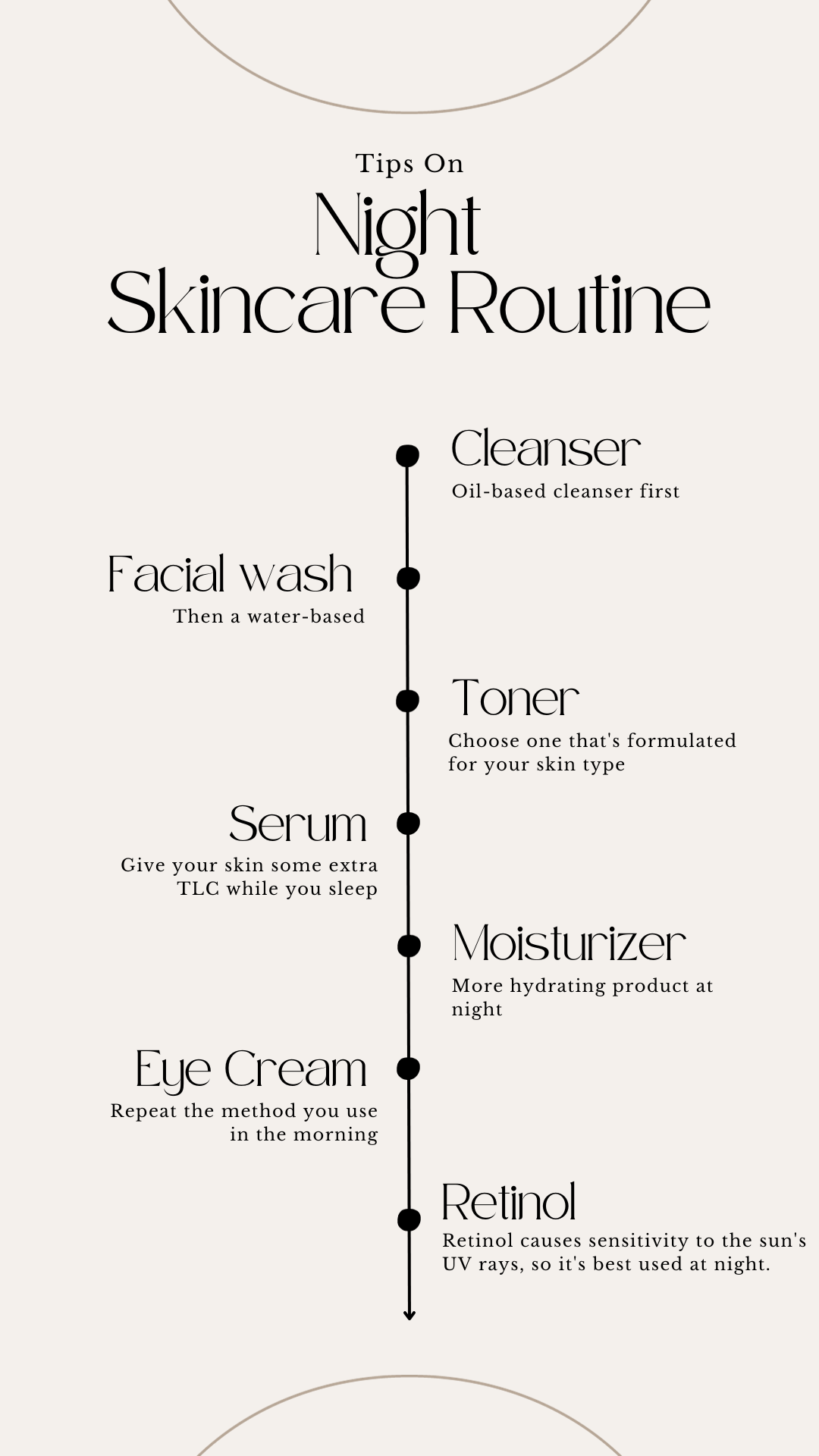
Following a nightly skin care routine helps repair and refresh your skin. Essential steps prepare your face to absorb nutrients and stay healthy. Each step plays a key role in maintaining clear and soft skin.
Gentle Cleansing Techniques
Start by removing dirt and makeup with a gentle cleanser. Use lukewarm water to avoid drying your skin. Massage the cleanser softly in circular motions for about 30 seconds. Rinse well and pat your face dry with a clean towel.
Toning For Balance
Apply a toner to restore your skin’s natural pH level. Choose an alcohol-free toner to avoid irritation. Use a cotton pad or your hands to spread it evenly. This step tightens pores and removes leftover impurities.
Moisturizing Effectively
Finish with a good moisturizer suited to your skin type. Apply in gentle upward strokes to boost absorption. Moisturizers lock in hydration and help skin repair overnight. Don’t forget to cover your neck and décolletage area.
Targeted Treatments
Targeted treatments are the power players in your nightly skin care routine. They address specific concerns your skin faces, such as dryness, dark circles, or blemishes, giving your complexion exactly what it needs to heal and glow overnight. Skipping these steps can mean missing out on faster, visible results.
Using Serums And Oils
Serums and oils are concentrated formulas designed to penetrate deep into your skin. They deliver active ingredients like vitamin C, hyaluronic acid, or retinol where they work best. If you’ve ever felt your moisturizer wasn’t enough, adding a serum can make a big difference.
Apply a few drops to clean, damp skin and gently pat it in. Oils come after serums to lock in moisture and nutrients. Have you noticed how your skin looks brighter or feels softer after using a serum consistently?
Eye Care Solutions
The skin around your eyes is thin and prone to dryness and fine lines. Eye creams or gels with ingredients like caffeine or peptides help reduce puffiness and dark circles. You only need a small amount—use your ring finger to gently tap the product in.
Think about how tired your eyes look after a long day. Giving them special care at night can make a visible difference in the morning. Have you tried an eye cream that actually worked for you?
Spot Treatments For Blemishes
Spot treatments are your secret weapon against pimples and breakouts. Ingredients like salicylic acid or benzoyl peroxide target inflammation and bacteria directly. Apply only on the affected area to avoid drying out the surrounding skin.
Using a spot treatment overnight can reduce redness and speed healing. If you’re tempted to cover every inch with these products, ask yourself if your skin really needs that much or if it might cause irritation instead.

Credit: www.pennsmithskincare.com
Choosing The Right Products
Choosing the right products for your nightly skin care routine is key to healthy skin. The right products help repair and nourish skin while you sleep. It is important to select products that suit your skin’s needs. This helps avoid irritation and ensures better results.
Ingredients To Look For
Some ingredients work well for skin repair and hydration. Look for:
- Hyaluronic Acid – helps keep skin moist and smooth.
- Retinol – supports skin cell renewal and reduces wrinkles.
- Vitamin C – brightens skin and fights damage from the sun.
- Niacinamide – calms skin and reduces redness.
- Peptides – boost collagen and improve skin firmness.
These ingredients help skin stay soft and healthy overnight.
Avoiding Harmful Components
Some ingredients can harm skin or cause irritation. Avoid products with:
- Alcohol – dries out skin and causes flaking.
- Fragrance – may cause allergic reactions or redness.
- Sulfates – strip natural oils and irritate skin.
- Parabens – linked to skin sensitivity and allergies.
- Harsh exfoliants – can damage skin barrier if used too often.
Choose gentle products to protect your skin’s health.
Customizing For Your Skin Type
Each skin type needs different care. Customize your routine as follows:
| Skin Type | Recommended Ingredients | Tips |
|---|---|---|
| Dry | Hyaluronic Acid, Ceramides, Oils | Use rich moisturizers and avoid harsh cleansers. |
| Oily | Salicylic Acid, Niacinamide, Lightweight gels | Choose oil-free, non-comedogenic products. |
| Sensitive | Aloe Vera, Chamomile, Fragrance-free products | Test products first and avoid irritants. |
| Combination | Balancing ingredients like Niacinamide, Light moisturizers | Use gentle products that hydrate without clogging pores. |
Knowing your skin type helps pick the best products.
Tips For Better Absorption
Getting the most out of your nightly skin care products depends largely on how well your skin absorbs them. Better absorption means your skin can fully benefit from the active ingredients, boosting hydration and repair overnight. Let’s dive into practical tips that can help your skin drink in every drop of your routine.
Layering Products Correctly
The order you apply your products affects how well they work. Start with the thinnest, water-based formulas like toners or essences, then move to thicker creams and oils. This helps each layer sink in without blocking the next.
Think about your skin type too. If you have oily skin, lighter gels and serums should go on before heavier creams. For dry skin, you might want to seal in moisture with an oil or balm at the end. Have you ever noticed a sticky feel after applying products? That’s often a sign you layered them in the wrong order.
Massage Techniques
Massaging your skin isn’t just relaxing—it actually improves product absorption. Use gentle, upward strokes with your fingertips to stimulate circulation and help the product penetrate deeper. Avoid tugging or pulling, especially around delicate areas like the eyes.
I started using small circular motions when applying my night cream, and the difference was clear: my skin looked plumper and felt softer by morning. You can try this for yourself—how does a few extra seconds of massage change your skin’s feel?
Optimizing Room Environment
Your environment plays a surprising role in skin care absorption. Dry air can sap moisture from your skin, making it harder for products to work effectively. Using a humidifier in your bedroom keeps the air moist and supports better hydration.
Temperature also matters. Warm rooms can open pores, allowing products to penetrate better. But too much heat can dry out your skin, so aim for a comfortable, moderate temperature. Have you noticed how your skin reacts differently in various climates?

Credit: www.colorescience.com
Common Mistakes To Avoid
Many people make mistakes in their nightly skin care routine. These errors can cause irritation and reduce the benefits of your effort. Knowing what to avoid helps keep your skin healthy and glowing.
Over-exfoliating
Exfoliating removes dead skin cells but too much can harm your skin. Over-exfoliating leads to redness, dryness, and sensitivity. Limit exfoliation to two or three times a week. Choose gentle products to prevent irritation.
Skipping Key Steps
Some skip essential steps like cleansing or moisturizing. Cleansing removes dirt and oils that clog pores. Moisturizing keeps skin hydrated and smooth. Missing these steps can cause breakouts and dryness. Follow a simple routine every night for best results.
Using Incompatible Products
Mixing products with harsh ingredients may cause reactions. Certain acids and retinoids do not work well together. Using incompatible products can dry or irritate your skin. Read labels and avoid combining strong treatments. Test new products on a small skin area first.
Enhancing The Routine With Lifestyle
Enhancing your nightly skin care routine goes beyond the products you apply. Your lifestyle choices play a huge role in how your skin looks and feels. Small changes in daily habits can boost the effects of your routine and help you wake up to healthier skin.
Hydration And Diet Impact
Drinking enough water daily helps keep your skin plump and glowing. Dehydration can make your skin look dull and highlight fine lines.
What you eat also directly affects your skin’s condition. Foods rich in antioxidants, like berries and leafy greens, fight free radicals that age your skin.
Try adding omega-3 fatty acids from fish or flaxseeds to reduce inflammation and improve skin elasticity. Avoiding too much sugar and processed foods can prevent breakouts and redness.
Sleep Quality And Skin Health
Good sleep is when your skin repairs itself the most. Lack of sleep can cause dark circles, puffiness, and a tired complexion.
Have you noticed how your skin looks worse after a sleepless night? That’s because poor rest increases stress hormones that break down collagen.
Creating a calming bedtime routine and sticking to regular sleep hours can make a visible difference in your skin’s texture and tone.
Stress Management
Stress triggers hormones that can cause flare-ups like acne or eczema. Managing stress can help keep your skin calm and balanced.
Simple practices like deep breathing, meditation, or even a short walk can lower stress levels and improve your skin’s appearance.
Have you tried journaling or listening to soothing music before bed? These small habits might reduce tension and support your nightly skin care efforts.
Frequently Asked Questions
What Are The Key Steps In A Nightly Skin Care Routine?
A nightly skin care routine includes cleansing, toning, applying serum, moisturizing, and using eye cream. These steps remove impurities and nourish your skin overnight, promoting repair and hydration.
How Often Should I Exfoliate In My Night Routine?
Exfoliate 1-2 times a week to remove dead skin cells. Over-exfoliating can irritate skin and cause dryness. Choose gentle exfoliants suitable for your skin type.
Can I Skip Moisturizer In My Nightly Routine?
No, moisturizer is essential at night. It locks in hydration and helps skin repair. Use a product suited to your skin type for best results.
Is Using Serum Necessary Every Night?
Using serum nightly is beneficial but not mandatory. Serums deliver concentrated ingredients that target specific skin concerns like aging or acne, enhancing overall skin health.
Conclusion
A good nightly skin care routine helps your skin rest and heal. Cleanse your face gently to remove dirt and oil. Use products that suit your skin type for best results. Consistency matters more than fancy products or quick fixes.
Give your skin time to show real improvement. Healthy skin looks fresh and feels soft every morning. Simple steps can make a big difference over time. Take care of your skin each night. Your face will thank you.
