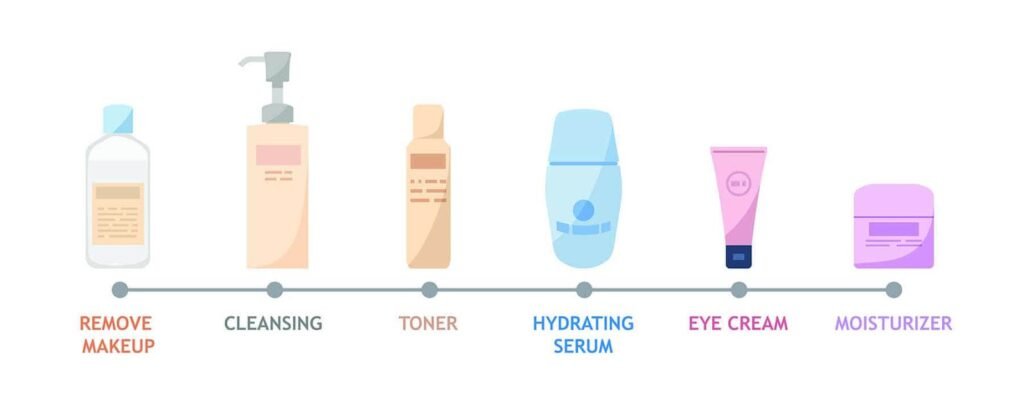
Imagine waking up each morning with skin that feels refreshed, radiant, and youthful. Sounds dreamy, right?
The secret lies in what you do the night before. Your nighttime skincare routine is more than just a series of steps; it’s a ritual that can transform your skin while you sleep. Think of it as a reset button, erasing the stress and grime of the day, and preparing your skin for a new start.
By investing just a few minutes each night, you can achieve glowing skin that boosts your confidence every morning. Are you ready to discover the simple yet powerful steps that will revolutionize your skin overnight? Keep reading to unlock the secrets of an effective nighttime skincare routine tailored just for you.
Benefits Of Night Care
Night care is crucial for healthy, glowing skin. It helps the skin recover from daily stress and damage. A good night routine supports natural processes that improve skin health. Consistent night care leads to smoother, clearer, and more youthful skin.
Skin Repair During Sleep
The skin repairs itself mostly during sleep. Cells regenerate faster at night than during the day. This repair helps heal damage from sun, pollution, and dryness. Night care products provide nutrients to support this process. Clean skin allows better absorption of these beneficial ingredients.
Boosting Collagen Production
Collagen keeps skin firm and elastic. The body produces more collagen at night. Applying night creams with collagen-boosting ingredients helps enhance this effect. Better collagen levels reduce fine lines and wrinkles. Night care supports a youthful and plump complexion.
Reducing Inflammation
Inflammation can cause redness and irritation. Night care routines often include soothing ingredients. These reduce swelling and calm sensitive skin. Less inflammation means fewer breakouts and a clearer complexion. Night care helps skin feel comfortable and balanced.
Cleansing Essentials
Cleansing is the foundation of a good night time skin care routine. It removes dirt, oil, and impurities that build up during the day. Proper cleansing helps your skin breathe and prepares it for other treatments. A clean face also prevents clogged pores and breakouts. Choosing the right cleanser and using the correct technique matters a lot for healthy skin.
Choosing The Right Cleanser
Pick a cleanser that suits your skin type. For dry skin, use a gentle, hydrating cleanser. Oily skin benefits from foaming or gel cleansers. Sensitive skin needs fragrance-free and mild formulas. Check the ingredients to avoid harsh chemicals. The cleanser should feel comfortable and not leave your skin tight or dry.
Double Cleansing Method
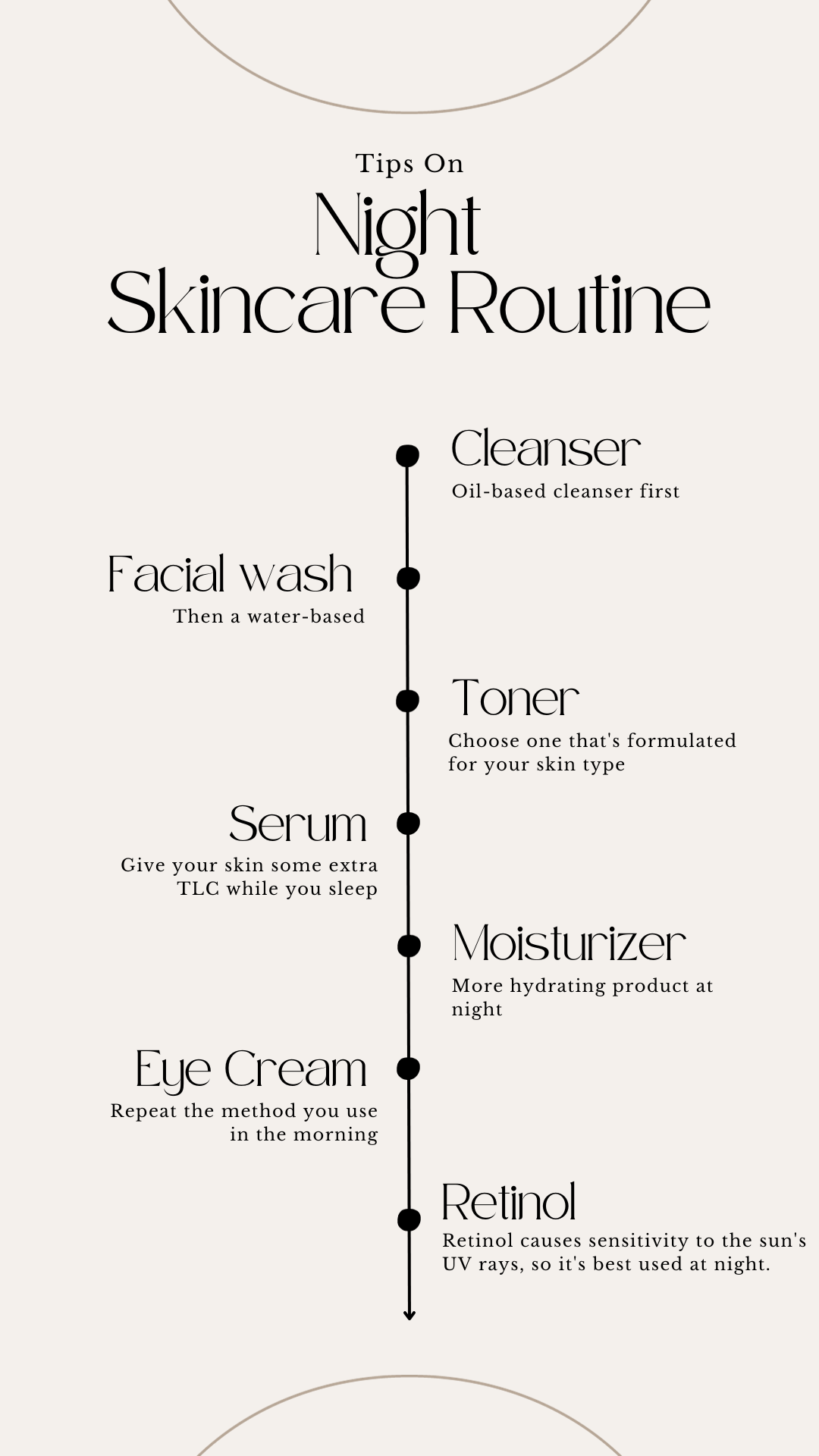
Double cleansing means using two different cleansers. Start with an oil-based cleanser to dissolve makeup and sunscreen. Follow with a water-based cleanser to wash away sweat and dirt. This method cleans deeply without stripping moisture. It is especially helpful for those who wear heavy makeup or live in polluted areas.
Removing Makeup Effectively
Makeup can block pores and cause skin problems if not removed well. Use a good makeup remover or cleansing oil first. Gently massage it on your face to break down makeup. Avoid harsh rubbing to protect your skin. Afterward, use a regular cleanser to wash off any leftover residue. Clean skin feels fresh and ready for night care products.
Exfoliation Tips
Exfoliation is a key part of any night time skin care routine. It helps remove dead skin cells, unclog pores, and reveal a brighter complexion. However, knowing how to exfoliate properly can make all the difference between glowing skin and irritation.
Types Of Exfoliants
There are two main types of exfoliants: physical and chemical. Physical exfoliants use small particles or brushes to manually scrub away dead skin. Examples include sugar scrubs and facial cleansing brushes.
Chemical exfoliants use acids or enzymes to dissolve dead skin cells without scrubbing. Popular options are alpha hydroxy acids (AHAs) like glycolic acid, and beta hydroxy acids (BHAs) like salicylic acid. Many people find chemical exfoliants gentler and more effective for sensitive skin.
How Often To Exfoliate
How often you exfoliate depends on your skin type and the exfoliant you use. Most people benefit from exfoliating 2-3 times a week. If you have dry or sensitive skin, once a week may be enough.
Pay attention to how your skin feels after exfoliating. If it looks red or feels tight, you might be overdoing it. On the other hand, if your skin feels smooth and refreshed, you’re on the right track.
Avoiding Over-exfoliation
Over-exfoliating can cause redness, irritation, and even breakouts. It breaks down your skin’s natural barrier, making it vulnerable to damage. If your skin feels raw or flaky, give it a break and switch to gentle hydration instead.
Ask yourself: Are you exfoliating because your skin truly needs it, or just out of habit? Sometimes less is more. Listen to your skin’s signals and adjust your routine accordingly to keep it healthy and balanced.
Credit: medium.com
Serums And Treatments
Serums and treatments are key parts of a night time skin care routine. They deliver active ingredients deep into the skin. These products target specific concerns like dullness, aging, or dryness. Using the right serum can improve skin texture and health overnight.
Vitamin C For Brightening
Vitamin C serums help brighten tired and dull skin. They reduce dark spots and even out skin tone. This antioxidant protects skin from damage caused by free radicals. Regular use leads to a radiant and glowing complexion.
Retinol For Anti-aging
Retinol is a powerful ingredient for reducing fine lines and wrinkles. It boosts collagen production and speeds up cell renewal. This treatment helps skin look firmer and smoother. Start with a low concentration to avoid irritation.
Hydrating Serums
Hydrating serums add moisture to dry or dehydrated skin. They often contain ingredients like hyaluronic acid that hold water in the skin. These serums improve skin’s softness and plumpness. Use them before applying a night cream for best results.
Moisturizing Strategies
Moisturizing plays a key role in any night time skin care routine. It helps repair the skin and keeps it soft. Choosing the right methods boosts hydration and supports skin health. Knowing how to pick and apply moisturizers improves results. Night creams and day creams serve different purposes. Understanding these differences guides better product choices for your skin’s needs.
Picking The Right Moisturizer
Choose a moisturizer based on your skin type. For dry skin, pick thick creams with oils or butters. Oily skin benefits from light, water-based lotions or gels. Sensitive skin needs fragrance-free and gentle formulas. Check ingredients like hyaluronic acid for hydration and ceramides for barrier repair. Avoid products with alcohol or harsh chemicals that can dry out skin. Test new products on a small area first to prevent reactions.
Layering Products Properly
Apply moisturizers after cleansing and toning. Use serums or treatments before moisturizing for better absorption. Layer light products first, then heavier creams on top. Allow each layer to absorb fully before adding the next. Don’t mix too many products to avoid clogging pores. Pat your skin gently instead of rubbing to keep it calm. Proper layering locks in moisture and boosts product benefits.
Night Cream Vs. Day Cream
| Feature | Night Cream | Day Cream |
|---|---|---|
| Texture | Thicker, richer | Lighter, fast-absorbing |
| Ingredients | More nourishing, includes repair agents | Includes SPF and antioxidants |
| Purpose | Repair and hydrate deeply | Protect and hydrate |
| Usage | Apply before sleep | Apply in the morning |
Night creams focus on skin repair during sleep. Day creams protect skin from sun and pollution. Using each at the right time maximizes benefits. Adjust your routine based on skin needs and seasons.
Additional Night Care Tips
Adding extra care steps to your night routine can boost your skin’s health. These simple tips target delicate areas and offer deep nourishment. They help maintain moisture and reduce signs of aging. Small changes make a big difference overnight.
Eye Cream Application
The skin around the eyes is thin and sensitive. Use a small amount of eye cream for this area only. Dab gently with your ring finger to avoid pulling the skin. Focus on the under-eye and outer corners to reduce puffiness and dark circles.
Lip Care Routine
Lips often dry out during sleep. Apply a thick layer of lip balm or treatment before bed. Choose balms with natural oils or shea butter for extra hydration. This keeps lips soft and prevents cracking by morning.
Using Facial Oils
Facial oils lock in moisture and nourish skin deeply. Select oils that suit your skin type, such as jojoba or rosehip oil. Apply a few drops after moisturizer for a healthy glow. Avoid heavy oils if you have oily or acne-prone skin.
Lifestyle Factors
Lifestyle factors play a key role in how your skin looks and feels. Your daily habits affect skin health deeply. Nighttime skin care is not just about products but also your routines and choices.
Sleep Quality And Skin Health
Good sleep helps skin repair and renew itself. Poor sleep causes dullness and dark circles. Aim for 7 to 8 hours of restful sleep. Create a calm environment and avoid screens before bed. Sleep boosts collagen production, which keeps skin firm.
Hydration Importance
Water keeps skin soft and flexible. Dehydration makes skin dry and flaky. Drink plenty of water throughout the day. Use a moisturizer at night to lock in moisture. Hydrated skin looks fresh and glows naturally.
Diet For Glowing Skin
Healthy food nourishes skin from the inside. Eat fruits and vegetables rich in vitamins C and E. Include foods with omega-3 fatty acids like fish and nuts. Avoid too much sugar and processed food. Balanced meals help reduce inflammation and boost skin brightness.

Credit: www.colorescience.com

Credit: www.reddit.com
Frequently Asked Questions
What Are The Essential Steps In A Night Time Skin Care Routine?
A night time skin care routine should include cleansing, toning, applying serum, moisturizing, and eye cream. These steps remove impurities and nourish skin overnight for a refreshed look.
How Often Should I Exfoliate In My Night Skin Care Routine?
Exfoliate 1-2 times per week at night to remove dead skin cells. Over-exfoliating can cause irritation and dryness, so moderation is key.
Can I Use Retinol Every Night In My Night Routine?
Start using retinol 2-3 times a week at night. Gradually increase frequency as your skin builds tolerance to avoid redness or peeling.
Why Is Moisturizing Important In A Night Skin Care Routine?
Moisturizing locks in hydration and repairs the skin barrier while you sleep. It prevents dryness and promotes a smooth, glowing complexion.
Conclusion
A good night time skin care routine helps your skin rest and heal. Cleanse your face gently to remove dirt and oil. Use a moisturizer to keep skin soft and hydrated. Don’t forget to apply products that suit your skin type.
Consistency matters more than fancy products or steps. Your skin will look healthier with time and care. A simple routine can make a big difference. Sleep well and let your skin renew itself. Small steps each night lead to glowing skin.
Keep it easy and stick to what works.
