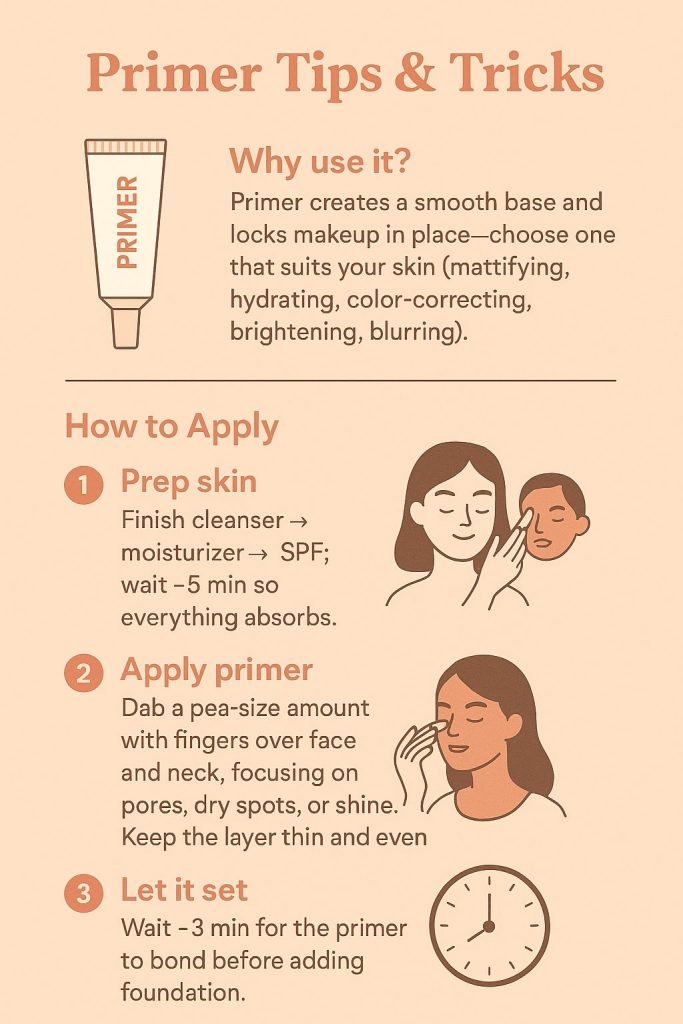
Have you ever wondered why your makeup doesn’t last as long as you want or why it sometimes looks uneven? The secret to flawless, long-lasting makeup often starts with one simple step: using a makeup primer.
If you want your foundation to glide on smoothly, stay put all day, and give your skin a fresh, radiant look, then understanding how to use makeup primer is a game-changer. Keep reading, and you’ll discover easy tips that can transform your makeup routine and boost your confidence every time you get ready.

Credit: www.youtube.com
Choosing The Right Primer
Choosing the right makeup primer can change how your makeup looks and lasts throughout the day. It’s not just about picking any primer off the shelf; it’s about finding one that suits your skin and makeup goals. Knowing what to look for will save you time and money, and help you avoid makeup mishaps.
Types Of Primers
Primers come in different forms, each designed to solve specific skin or makeup challenges.
- Silicone-based primerscreate a smooth surface and fill in pores and fine lines.
- Water-based primersare lighter and better for oily or acne-prone skin.
- Hydrating primersadd moisture, great if your skin feels dry or flaky.
- Color-correcting primersuse shades like green or purple to neutralize redness or dullness.
Have you tried different types and noticed how your foundation applies differently? That’s a clue to what your skin needs most.
Skin Type Considerations
Your skin type is a major factor in choosing the right primer. Using the wrong one can cause your makeup to slide off or cling to dry patches.
- Oily skin:Look for mattifying primers that control shine without clogging pores.
- Dry skin:Choose primers with hydrating ingredients to keep your skin smooth and plump.
- Combination skin:You might need to mix primers or find a balanced formula that targets both oily and dry areas.
- Sensitive skin:Pick fragrance-free, gentle primers to avoid irritation or breakouts.
Think about how your skin feels throughout the day. Does it get oily, dry, or stay balanced? That’s your guide to the right primer choice.
Primer Ingredients To Look For
Ingredients matter more than fancy packaging. Some can improve your skin’s texture, while others might cause problems.
| Ingredient | Benefit | Best For |
|---|---|---|
| Hyaluronic Acid | Hydrates and plumps skin | Dry and aging skin |
| Silicones (Dimethicone) | Smooths and blurs pores | All skin types, especially oily |
| Salicylic Acid | Exfoliates and prevents breakouts | Acne-prone skin |
| Vitamin E | Protects and nourishes skin | Dry and sensitive skin |
Next time you shop, check the label carefully. Do you see ingredients that support your skin’s needs, or are there fillers that might do more harm than good?

Credit: swissbeauty.in
Preparing Your Skin
Preparing your skin before applying makeup primer is essential. Clean, smooth, and well-cared-for skin allows the primer to work better. It helps your makeup last longer and look fresh. Take a few simple steps to get your skin ready for a perfect base.
Cleansing And Moisturizing
Start with a gentle cleanser to remove dirt and oil. Clean skin prevents clogged pores and uneven texture. After cleansing, apply a lightweight moisturizer. Moisturized skin helps primer spread smoothly and keeps your face hydrated. Choose products that suit your skin type for best results.
Exfoliation Tips
Exfoliate your skin once or twice a week to remove dead cells. This step creates a smooth surface for primer application. Use a mild scrub or a chemical exfoliant with ingredients like AHAs or BHAs. Avoid harsh scrubs that can irritate your skin. Always follow exfoliation with moisturizing.
Addressing Specific Skin Concerns
Treat any skin issues before applying primer. Use spot treatments for acne or redness. For dry skin, add a hydrating serum before moisturizer. Oily skin benefits from mattifying products to control shine. Tailoring your routine helps the primer work better on your unique skin.
Applying Primer Correctly
Applying primer correctly can make a huge difference in how your makeup looks and lasts throughout the day. It’s not just about slapping on a product; the way you apply primer affects your skin’s texture and how well your foundation sticks. Let’s break down how to get the best results with simple tools and smart techniques.
Tools And Techniques
Using the right tools can change everything. Many prefer using their fingers because the warmth helps the primer blend seamlessly into the skin. However, a damp makeup sponge or a flat synthetic brush can offer more precision, especially around tricky areas like the nose or under the eyes.
Patting the primer gently rather than rubbing it ensures an even layer without disturbing your skincare. Have you ever noticed your foundation sliding off? It could be because you applied the primer too roughly or unevenly. Try tapping motions to set the primer in place.
Amount To Use
Less is more when it comes to primer. Using too much can create a sticky or cakey base that causes makeup to slide or break apart. A pea-sized amount is usually enough for your entire face.
Focus on spreading the primer thinly and evenly. Think of it like painting a wall—you want a smooth base, not thick clumps. If you feel the primer is drying too quickly, apply it in sections rather than all at once.
Target Areas For Application
Not all parts of your face need the same amount of primer. Concentrate on areas where your makeup tends to fade or where your skin texture is uneven. Common spots include the T-zone, around the nose, and cheeks.
If you have oily skin, apply a mattifying primer mainly in these zones to control shine. Dry patches benefit from a hydrating primer applied gently to avoid flakiness. Have you tried customizing primer application based on your skin’s needs? This small step can elevate your makeup game.
Primer For Different Makeup Looks
Makeup primers prepare your skin for foundation and other products. They create a smooth base and help makeup last longer. Different makeup looks need different types of primers. Choosing the right primer improves the final result and comfort.
Everyday Natural Look
For a fresh, natural look, pick a lightweight primer. It should hydrate and smooth the skin without adding shine. A good choice is a silicone-based or hydrating primer. These help your makeup blend easily and look natural all day.
Long-lasting Makeup
Use a mattifying or pore-filling primer for long-lasting makeup. These primers control oil and reduce shine. They keep your foundation in place during hot or humid days. Look for primers with a matte finish to avoid a greasy look.
Photogenic And Special Occasions
Choose a primer with light-reflecting properties for photos and events. These primers add a subtle glow to your skin. They blur imperfections and create a flawless finish. A smoothing or illuminating primer helps your makeup look perfect on camera.
Common Mistakes To Avoid
Makeup primer helps your makeup last longer and look smoother. Avoid common mistakes to get the best results. These errors can cause uneven makeup or skin irritation. Learn what to avoid for a flawless finish.
Using Too Much Primer
Applying too much primer can make your skin feel heavy and sticky. It may cause your makeup to slide off or look cakey. Use a pea-sized amount and spread it evenly. Less is more when it comes to primer.
Skipping Skin Prep
Primer works best on clean, moisturized skin. Skipping cleansing or moisturizing can cause primer to stick unevenly. Always wash your face and apply moisturizer before primer. This step helps your makeup stay fresh all day.
Choosing The Wrong Primer
Not all primers suit every skin type. Using a mattifying primer on dry skin can cause flaking. A hydrating primer on oily skin may increase shine. Pick a primer that matches your skin’s needs for the best effect.

Credit: www.yesmadam.com
Enhancing Primer Benefits
Makeup primer creates a smooth base for your makeup. Enhancing its benefits helps your makeup last longer and look better. Small techniques improve primer’s effect on your skin.
Layering With Other Products
Apply primer on clean, moisturized skin. Use lightweight products on top, like serum or light moisturizer, before primer. This keeps skin hydrated without causing heaviness.
Choose foundation and concealer that match your primer type. For example, use oil-free foundation with mattifying primer. This avoids clumping and helps makeup stay fresh.
Setting Primer For Longevity
After applying primer, use a translucent setting powder lightly. This locks the primer and reduces shine. It helps makeup stay put all day.
Use a setting spray to finish your base. Spray from a distance for even coverage. It seals your makeup and keeps primer stable.
Touch-up Tips Throughout The Day
Carry blotting papers to remove excess oil without disturbing makeup. Press gently on oily areas to refresh skin.
Use a small amount of primer on dry patches before reapplying foundation. This smooths texture and prevents makeup flaking.
Keep a travel-size setting spray for quick touch-ups. A light mist revives your makeup and maintains primer’s hold.
Frequently Asked Questions
What Is The Main Purpose Of Makeup Primer?
Makeup primer creates a smooth base for foundation. It helps makeup last longer and prevents creasing. It also minimizes pores and controls oil for a flawless look.
How Do I Apply Makeup Primer Correctly?
Apply a pea-sized amount on clean, moisturized skin. Use fingertips to spread evenly over the face. Focus on areas with large pores or fine lines. Let it absorb before applying foundation.
Can Makeup Primer Improve Skin Texture?
Yes, primer smooths uneven skin texture. It fills in fine lines and blurs imperfections. This results in a more polished and flawless makeup finish.
Which Primer Suits Oily Skin Best?
Look for mattifying primers with oil-absorbing ingredients. These control shine and reduce excess oil throughout the day. Silicone-based primers also help create a smooth, long-lasting base.
Conclusion
Makeup primer is essential for a flawless look. It smooths your skin. This creates a perfect base for foundation. Choose the right primer for your skin type. Apply a small amount evenly. Let it sit for a minute before foundation.
This ensures longer-lasting makeup. Primers also help control oil and reduce shine. Experiment with different products to find your favorite. Remember, a little goes a long way. Keep your makeup routine simple and effective. Enjoy your enhanced, beautiful look every day.
