Your nails say a lot about you—they’re a small detail that can boost your confidence or quietly hold you back. If you’ve ever struggled with weak, brittle, or chipped nails, you know how frustrating it can be.
But taking care of your nails doesn’t have to be difficult or time-consuming. In fact, with a few simple steps, you can transform your nails into strong, healthy, and beautiful features that you’ll want to show off. Ready to learn how to make your nails look and feel their best?
Keep reading, because these easy tips will change the way you care for your nails forever.
Nail Anatomy Basics
Understanding the basics of nail anatomy can change the way you care for your nails. Knowing what each part does helps you spot issues early and treat your nails better. Let’s break down the key parts of your nail and how they grow.
Parts Of A Nail
Your nail is more than just the hard surface you see. It has several important parts that work together to protect your fingertips and support delicate tasks.
- Nail Plate:This is the visible hard part of your nail. It’s made of a protein called keratin, which gives nails their strength.
- Nail Bed:The skin underneath the nail plate. It supplies nutrients and supports nail growth.
- Cuticle:The thin layer of skin at the base of your nail. It acts as a barrier to protect new nail cells from bacteria.
- Matrix:Located under the skin at the nail’s base, this is where new nail cells are made. Damage here can affect nail growth permanently.
- Lunula:The white, crescent-shaped area at the nail’s base. It’s part of the matrix and shows active nail growth.
Ever noticed your cuticles getting dry or damaged? Protecting them can prevent infections and keep your nails looking healthy.
How Nails Grow
Nails grow from the matrix, hidden under your skin at the nail’s base. New cells push older ones forward, hardening as they move out to form the nail plate.
On average, nails grow about 3 millimeters per month. But this can change based on your age, diet, and overall health.
Have you ever wondered why nails grow faster in summer? Increased blood circulation and exposure to sunlight can speed up nail growth.
Keeping your nails hydrated and eating foods rich in biotin, like eggs and nuts, supports healthy growth. Have you tried moisturizing your nails regularly? It can make a big difference.
Daily Nail Care Routine
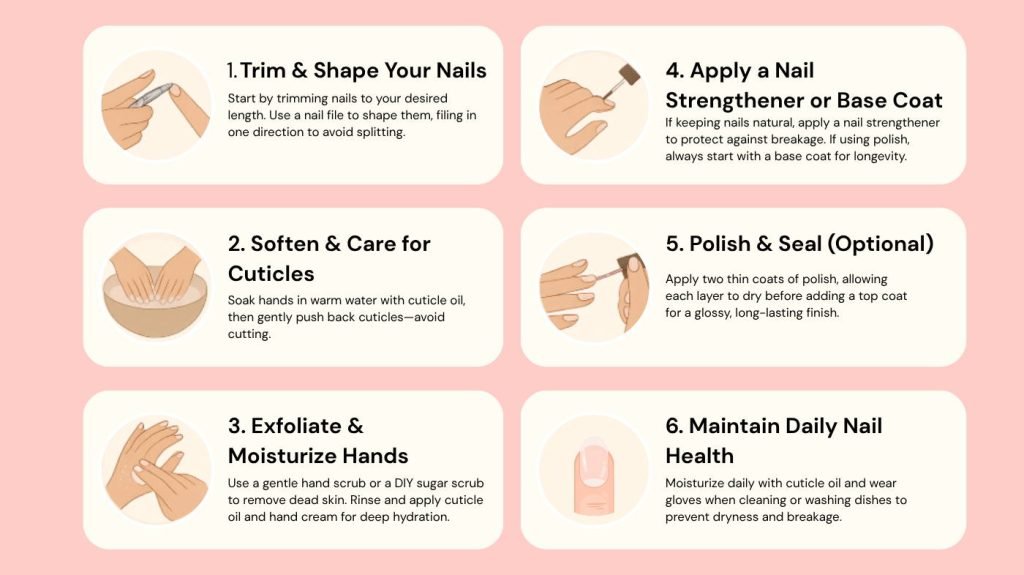
Keeping your nails healthy doesn’t require a complicated routine. A simple daily nail care routine can make a huge difference in their strength and appearance. Small, consistent habits protect your nails from damage and promote growth.
Cleaning And Moisturizing
Clean nails look neat and prevent infections. Use a soft nail brush to gently remove dirt under your nails every day. Avoid harsh soaps that dry out your skin and nails.
Moisturizing is just as important as cleaning. Apply a hand cream or cuticle oil daily to keep the skin around your nails soft. This prevents cracking and peeling, which can weaken your nails.
Proper Nail Trimming
Trim your nails regularly to avoid breakage and snagging. Use sharp nail clippers and cut straight across to prevent ingrown nails. Then, smooth the edges with a nail file using gentle, one-way strokes.
How often should you trim? It depends on your nail growth, but generally, every one to two weeks works well. This keeps your nails manageable and reduces the chance of damage from overgrowth.
Avoiding Nail Biting
Nail biting can ruin your nail health and introduce bacteria. If you catch yourself biting, try to replace the habit with a healthier one, like squeezing a stress ball or using a fidget toy.
Applying a bitter-tasting nail polish can also discourage biting. Have you noticed how small changes, like this, can break stubborn habits? Your nails will thank you for the extra care.
Nutrition For Strong Nails
Strong, healthy nails start from within. What you eat directly impacts the condition of your nails, affecting their strength, growth, and overall appearance. Paying attention to your nutrition can make a visible difference, even if you’ve struggled with brittle or weak nails before.
Essential Vitamins And Minerals
Your nails need a variety of vitamins and minerals to stay strong and healthy. Biotinis one of the most important; it helps your body produce keratin, the protein that makes up your nails. Without enough biotin, nails can become thin and brittle.
Other key nutrients include:
- Vitamin E– protects nails from damage and promotes growth.
- Iron– low iron can cause nails to become spoon-shaped or develop ridges.
- Zinc– helps with cell growth and repair, essential for nail strength.
- Vitamin C– supports collagen production, which keeps nails firm.
Have you ever noticed your nails peeling or breaking after a period of stress or poor diet? That’s often a sign your body is lacking some of these vital nutrients.
Foods That Promote Nail Health
Adding specific foods to your diet can boost your nail health quickly. Eggs, rich in biotin and protein, are an easy way to support nail growth. Spinach and other leafy greens provide iron and vitamin C, essential for strong nails and healthy skin around them.
Consider including:
- Almondsand other nuts – full of vitamin E and zinc.
- Sweet potatoes– packed with vitamin A, which helps maintain nail moisture.
- Salmon– offers omega-3 fatty acids and vitamin D, reducing inflammation around nail beds.
- Beans and lentils– excellent plant-based sources of iron and protein.
Try swapping out snacks for a handful of nuts or adding an egg to your breakfast. These small changes can lead to stronger nails in just a few weeks. What simple food choices can you make today to start strengthening your nails?
Protecting Nails From Damage
Nails face many risks every day. They can break, chip, or become weak easily. Protecting nails helps keep them strong and healthy. Simple habits make a big difference. Avoiding damage lets nails grow well and look nice.
Using Gloves For Chores
Wear gloves during cleaning or gardening. Gloves stop nails from breaking or getting dirty. They protect nails from water and harsh surfaces. Use rubber or latex gloves for wet work. Use sturdy gloves for rough tasks.
Avoiding Harsh Chemicals
Many household products harm nails. Avoid strong detergents and solvents. These chemicals dry out nails and skin. Use gentle, nail-friendly cleaners. Check product labels for harmful ingredients. Less exposure means healthier nails.
Choosing Nail Products Wisely
Select nail polishes and removers carefully. Avoid products with acetone or strong chemicals. Pick formulas with nourishing ingredients. Use base coats to protect nails. Limit polish use to prevent dryness. Healthy nails need gentle care products.
Dealing With Common Nail Problems
Nail problems can affect the health and appearance of your nails. They may cause discomfort or embarrassment. Understanding common issues helps you care for nails better. Simple steps can improve nail condition and prevent damage.
Brittle Nails
Brittle nails break or split easily. They feel dry and weak. Avoid harsh chemicals like detergents without gloves. Moisturize nails and cuticles daily with oils or creams. Keep nails short to reduce breaking. Eat foods rich in vitamins and minerals for strength.
Discoloration Issues
Nails may change color due to stains or illness. Yellow or dark spots can appear. Avoid nail polish for a few days to see changes. Clean nails gently with a soft brush. Use whitening toothpaste to remove stains. Consult a doctor if discoloration persists or spreads.
Fungal Infections
Fungal infections cause thick, crumbly nails. They can look yellow, white, or green. Keep feet and hands dry and clean. Avoid sharing nail tools or shoes. Use antifungal creams or powders as directed. Visit a healthcare provider for persistent infections.
Credit: eyecandys.com
Professional Nail Care Tips
Professional nail care goes beyond just looking good; it ensures the health and strength of your nails. Paying attention to expert advice can prevent common problems like infections, nail damage, and discomfort. These tips will help you know when to get professional help and how to keep your manicure and pedicure safe and effective.
When To Visit A Specialist
You should see a nail specialist if you notice persistent changes in your nails, such as discoloration, thickening, or pain. These could be signs of fungal infections or other underlying health issues that need expert attention.
If you have diabetes or circulation problems, regular visits to a podiatrist for your toenails are essential to avoid complications. Also, if you experience frequent nail breakage or ingrown nails, a professional can provide treatments tailored to your needs.
Ignoring these signs can lead to worsening conditions, so ask yourself: Are you comfortable with your nail health, or is it time to get a professional opinion?
Safe Manicure And Pedicure Practices
Always choose salons that maintain strict hygiene standards. Tools should be sterilized or disposable to prevent infections.
During your manicure or pedicure, make sure the technician avoids cutting cuticles too deeply, as this can cause pain and increase infection risk. Gentle pushing back of cuticles is safer and healthier.
Consider bringing your own nail tools if you worry about cleanliness. Also, avoid harsh chemicals that can damage your nails and skin—ask about the products used before your appointment.
- Check salon licenses and reviews beforehand.
- Request clean, sanitized tools.
- Choose waterless manicures if you want to reduce infection chances.
- Keep your nails moisturized after the session.
Have you ever experienced discomfort or infection after a salon visit? Sharing your experience might help others choose safer nail care options.
Boosting Nail Growth
Nail growth depends on good care and healthy habits. Strong nails start with proper stimulation and nourishment. Simple daily actions can help nails grow faster and look healthier. Focus on methods that improve blood flow and provide essential nutrients to your nails.
Massage Techniques
Massaging your nails improves blood circulation. It helps deliver nutrients to the nail bed, encouraging growth.
- Use gentle pressure with your fingertips around each nail.
- Apply a small amount of oil or moisturizer during the massage.
- Massage in circular motions for about 2-3 minutes per hand.
- Do this daily for best results.
Regular massage also relaxes the surrounding skin and cuticles. Healthy cuticles protect the nail matrix where growth happens.
Supplements And Treatments
Vitamins and minerals support nail growth from within. Biotin, zinc, and vitamin E are known for strengthening nails.
- Consider biotin supplements after consulting a healthcare provider.
- Eat foods rich in zinc like nuts and seeds.
- Apply vitamin E oil directly to nails to improve moisture.
- Use nail-strengthening treatments with keratin or calcium.
Keep nails hydrated to avoid brittleness. Regular use of cuticle oils and hand creams helps retain moisture. Healthy nails grow longer and resist breakage.
Credit: www.starnailswaxahachie.com

Credit: www.vettsy.com
Frequently Asked Questions
How Often Should I Trim My Nails For Healthy Growth?
Trim your nails every one to two weeks to maintain their health. Regular trimming prevents breakage and promotes even growth. Use clean, sharp nail clippers and avoid cutting too close to the skin. Keeping nails short reduces the risk of dirt accumulation and infections.
What Are The Best Natural Oils For Nail Care?
Natural oils like coconut, jojoba, and almond oil nourish nails effectively. They moisturize cuticles, prevent dryness, and strengthen nails. Applying these oils daily boosts nail health and adds shine. Regular oil massages improve blood circulation, promoting faster nail growth.
How Can I Prevent Nail Infections At Home?
Keep nails clean and dry to avoid infections. Avoid biting nails or picking cuticles, which can introduce bacteria. Use gentle nail products and avoid harsh chemicals. Regularly disinfect nail tools and wear gloves during household chores to protect your nails.
Does Diet Affect Nail Health And Growth?
Yes, a balanced diet rich in vitamins and minerals supports nail health. Biotin, zinc, and protein are essential for strong nails. Hydration also helps prevent brittleness. Eating fruits, vegetables, and nuts supplies necessary nutrients for healthy nail growth.
Conclusion
Caring for your nails boosts your overall health. Clean them regularly. Trim them carefully to avoid injury. Moisturize daily to prevent dryness. Choose nail products wisely to avoid damage. Healthy habits, like a balanced diet, support nail growth. Avoid biting or using nails as tools.
These tips ensure strong, beautiful nails. Consistent care makes a big difference. Enjoy healthier, more attractive nails with little effort. Remember, small steps lead to big results. Keep your nails in top shape with these easy practices. Your hands will thank you for it!
