Are you sure you’re applying your face skincare products in the right order? Using the wrong sequence can reduce their effectiveness, leaving your skin less radiant and fresh than it could be.
Imagine unlocking the full power of every cleanser, serum, and moisturizer you use — that’s exactly what the right skincare routine order can do for you. You’ll discover the simple steps to follow so your skin gets the maximum benefit from each product.
Keep reading, and your skin will thank you for it.
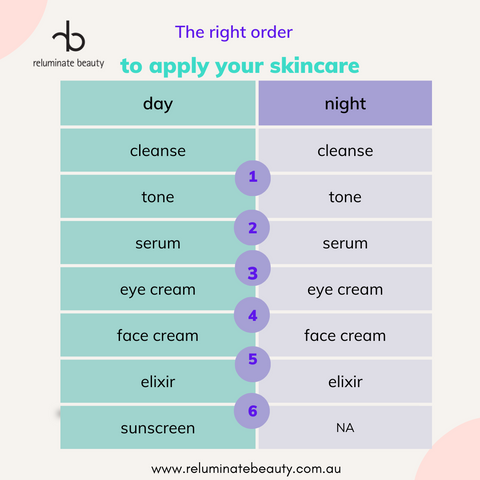
Credit: reluminatebeauty.com.au
Cleansing Basics
Cleansing is the first and most important step in any skincare routine. It removes dirt, oil, and impurities from the skin’s surface. Proper cleansing helps keep the skin fresh and ready for the next steps. Skipping this step can cause clogged pores and dull skin.
Choosing The Right Cleanser
Select a cleanser that suits your skin type. For dry skin, use a gentle, hydrating cleanser. Oily skin benefits from foaming or gel cleansers. Sensitive skin needs mild, fragrance-free formulas. Avoid harsh cleansers that strip natural oils. Look for ingredients that nourish and protect the skin barrier.
Proper Cleansing Technique
Use lukewarm water to wet your face. Apply a small amount of cleanser to your fingers. Gently massage in circular motions for 30 seconds. Focus on areas like the forehead, nose, and chin. Rinse thoroughly without leaving any residue. Pat your face dry with a soft towel. Avoid scrubbing or using hot water, which irritates the skin.
Double Cleansing Method
This method uses two cleansers to clean deeply. Start with an oil-based cleanser to remove makeup and sunscreen. Follow with a water-based cleanser to clean sweat and dirt. Double cleansing helps unclog pores and refresh the skin. It is especially useful for oily or acne-prone skin. Use this method at night for best results.
Exfoliation Steps
Exfoliation is a key step in your face skincare routine that helps remove dead skin cells and reveal a fresher, smoother complexion. Skipping it can leave your skin looking dull and cause clogged pores. However, knowing how and when to exfoliate is essential to avoid irritation and get the best results.
Physical Vs Chemical Exfoliants
Physical exfoliants use small particles or tools to manually scrub away dead skin. Think of gentle scrubs with sugar or a soft brush. They can be satisfying but may cause micro-tears if used too harshly.
Chemical exfoliants rely on acids like AHAs (glycolic acid) or BHAs (salicylic acid) to dissolve dead skin cells. These are often gentler and more effective for deep cleansing, especially if you have sensitive or acne-prone skin. Have you noticed how your skin feels after using a chemical exfoliant compared to a scrub?
How Often To Exfoliate
Exfoliating too often can strip your skin’s natural oils and cause redness. Most skin types benefit from exfoliating 2-3 times per week. If your skin is sensitive, once a week might be enough.
Adjust the frequency based on how your skin reacts. If you notice dryness or irritation, reduce exfoliation and add more hydration instead. Your skin will tell you what it needs—are you listening closely enough?
Precautions During Exfoliation
Always apply exfoliants on clean skin and avoid the delicate eye area. Use gentle motions to prevent damage. Over-exfoliating can lead to redness, sensitivity, and even breakouts.
After exfoliating, your skin is more vulnerable to sun damage. Never skip applying sunscreen afterward. Have you checked your sunscreen’s SPF lately? It’s a crucial partner to your exfoliation routine.
Toning Benefits
Toning plays a key role in a face skincare routine. It helps balance the skin’s pH after cleansing. Toning also removes leftover dirt and oil. It prepares the skin to absorb moisturizers and serums better. Regular use of toner can make the skin look fresh and smooth. It can even reduce the appearance of pores and control oil. Toning benefits both dry and oily skin types.
Selecting A Suitable Toner
Choose a toner based on your skin type. For dry skin, pick hydrating toners with ingredients like aloe vera or glycerin. Oily skin benefits from toners with salicylic acid or witch hazel to control shine. Sensitive skin needs gentle, alcohol-free formulas. Avoid toners with strong fragrances or harsh chemicals. Read the labels carefully to find what suits your needs.
Applying Toner Effectively
Apply toner right after cleansing your face. Use a cotton pad or your clean hands to spread it evenly. Dab the toner gently on your skin without rubbing. Focus on areas prone to oil or dryness. Allow the toner to dry naturally before moving to the next step. This helps the skin absorb the product fully and stay refreshed.

Credit: www.pennsmithskincare.com
Serum Application
Serums are a powerful part of your face skincare routine. They deliver concentrated ingredients that target specific skin concerns deeply and effectively. Applying serums correctly can make a noticeable difference in how your skin looks and feels.
Types Of Serums For Different Skin Concerns
Choosing the right serum depends on your skin’s unique needs. Here are some common types:
- Hydrating Serums:Packed with hyaluronic acid, these serums boost moisture and plump your skin.
- Brightening Serums:Vitamin C serums help reduce dark spots and give your skin a radiant glow.
- Anti-Aging Serums:Look for retinol or peptides to smooth fine lines and improve elasticity.
- Acne-Fighting Serums:Salicylic acid or niacinamide serums can reduce breakouts and calm inflammation.
Think about what your skin really needs before picking a serum. You don’t want to overload your skin with too many active ingredients at once.
Layering Serums Correctly
Applying multiple serums can be tricky but very effective if done right. The key is to layer from the thinnest to the thickest texture.
Start with water-based serums like hyaluronic acid, then move on to oil-based or thicker formulas. This order helps your skin absorb each product fully.
Let each serum dry for about a minute before adding the next. Have you ever felt sticky or heavy after applying serums? That usually means you rushed the layering process.
Also, don’t forget to apply serums on clean skin to maximize absorption. Skipping this step wastes your product and your time.
Moisturizing Tips
Moisturizing is a key step in any skincare routine. It helps keep your skin soft, smooth, and healthy. Using the right moisturizer protects your skin from dryness and damage. Proper moisturizing can also improve your skin’s texture and glow.
Choosing the right moisturizer depends on your skin type and the time of day. Some moisturizers work better during the day, while others are ideal for night use. Knowing these differences helps you get the best results.
Choosing Moisturizers For Your Skin Type
Select a moisturizer that fits your skin’s needs. For oily skin, pick a light, oil-free moisturizer. For dry skin, use a thick, cream-based one. Sensitive skin needs a gentle, fragrance-free option. Combination skin benefits from a balanced formula that hydrates without feeling heavy.
- Oily skin: gel or water-based moisturizers
- Dry skin: rich creams or ointments
- Sensitive skin: calming, fragrance-free products
- Combination skin: lightweight but nourishing lotions
Day Vs Night Moisturizers
Day moisturizers are usually lighter and may contain SPF. They protect your skin from the sun and pollution. Night moisturizers are richer and focus on repair. They often contain ingredients that work best while you sleep.
| Type | Purpose | Key Features |
|---|---|---|
| Day Moisturizer | Hydrate and protect skin | Light texture, SPF, antioxidants |
| Night Moisturizer | Repair and nourish skin | Rich texture, hydrating, skin-repair ingredients |
Sun Protection
Sun protection is a vital part of any skincare routine. It shields your skin from harmful ultraviolet (UV) rays. These rays cause premature aging, dark spots, and skin cancer risks. Using sunscreen daily helps keep your skin healthy and youthful. Even on cloudy days or indoors, UV rays can reach your skin. Consistent sun protection improves your skin’s texture and tone over time.
Importance Of Sunscreen
Sunscreen blocks UVA and UVB rays that damage skin cells. It prevents sunburn and reduces the risk of skin cancer. Regular use lowers the chance of wrinkles and fine lines. Sunscreen also helps maintain an even skin tone. Without it, your skin ages faster and looks dull. Protecting your skin daily is the best way to keep it healthy.
How To Apply Sunscreen Properly
Apply sunscreen as the last step in your skincare routine. Use it after moisturizer and before makeup. Use enough product to cover all exposed skin areas. About a teaspoon for your face and neck works well. Gently rub the sunscreen until it absorbs fully. Reapply every two hours if you stay outside long. Don’t forget places like ears, neck, and hairline.
Additional Skincare Steps
Adding extra steps to your skincare routine can make a big difference in how your skin looks and feels. These additional treatments target specific concerns and boost the overall effectiveness of your daily regimen. Let’s look at how to fit these steps in the right order to get the best results.
Face Masks And Their Timing
Face masks are powerful tools for delivering nutrients deep into your skin. Use them after cleansing but before applying heavier creams or oils. This timing ensures your skin absorbs the mask’s ingredients fully without barriers.
Choose masks based on your skin’s needs—hydrating masks for dry skin, clay masks for oily or acne-prone skin. Leaving a mask on too long can irritate your skin, so follow the instructions carefully. Have you noticed how your skin feels immediately after a mask? That’s when to lock in moisture with a serum or moisturizer.
Eye Cream Usage
Eye cream is designed for the delicate skin around your eyes, which needs gentle care. Apply it after cleansing and toning but before your moisturizer. This order allows the eye cream to absorb quickly and deliver hydration where it’s needed most.
Use your ring finger to dab the cream gently, avoiding tugging or rubbing. If you’ve ever experienced puffiness or dark circles, eye creams with caffeine or peptides can help reduce these issues. Do you give enough attention to your eye area in your routine?
Spot Treatments
Spot treatments target blemishes directly and should be applied on clean, dry skin. Use them after your toner and before heavier creams or oils. This placement helps the treatment work effectively without getting diluted.
Apply a small amount only to the affected area and avoid spreading it to healthy skin. Overuse can cause dryness or irritation, so use spot treatments sparingly. Have you found a spot treatment that works well for your skin, or do you keep trying new ones?
Common Skincare Mistakes
Many people make common mistakes in their skincare routine. These errors can harm the skin or reduce the benefits of products. Avoiding these mistakes helps improve skin health and appearance. Here are some frequent errors to watch out for.
Overusing Products
Applying too many products can irritate the skin. More is not always better. Overuse may cause redness, dryness, or breakouts. Follow the recommended amount and frequency for each product. Let your skin rest between applications.
Ignoring Patch Tests
Skipping patch tests risks allergic reactions or irritation. Test new products on a small skin area first. Wait 24-48 hours to check for any negative response. This step protects your skin from harm and discomfort.
Skipping Steps
Leaving out steps weakens your skincare routine. Each step has a purpose, like cleansing or moisturizing. Missing steps can cause buildup or dryness. Follow the order to get the best results from your products.
Tips For Glowing Skin
Achieving glowing skin isn’t just about the products you apply; it involves a combination of habits that nourish your skin from the inside out. Small lifestyle changes can make a huge difference in how your skin looks and feels. Let’s focus on some practical tips that can help you maintain that radiant glow every day.
Hydration And Diet
Water is your skin’s best friend. Drinking enough water helps flush out toxins and keeps your skin plump and smooth.
Think about what you eat—foods rich in antioxidants, vitamins, and healthy fats support skin health. Adding berries, nuts, and leafy greens to your meals can give your skin a natural boost.
Have you noticed how your skin reacts after a heavy junk food day? It’s often dull and tired. Try swapping processed snacks for fresh options and observe the change.
Consistent Routine
Your skin thrives on consistency. Sticking to a daily skincare routine helps maintain balance and prevents issues like dryness or excess oil.
Use gentle cleansers, moisturize regularly, and always apply sunscreen—even on cloudy days. These habits protect your skin and keep it glowing.
Have you ever skipped your routine and seen your skin react negatively? That’s a clear sign consistency matters more than fancy products.
Adequate Sleep
Sleep is when your skin repairs itself. Without enough rest, your skin can look dull, tired, and even develop dark circles.
Try to get 7-8 hours of quality sleep each night. You’ll notice your complexion becomes brighter and more refreshed.
Next time you feel tempted to stay up late, ask yourself: is a few extra hours of sleep worth better skin tomorrow?
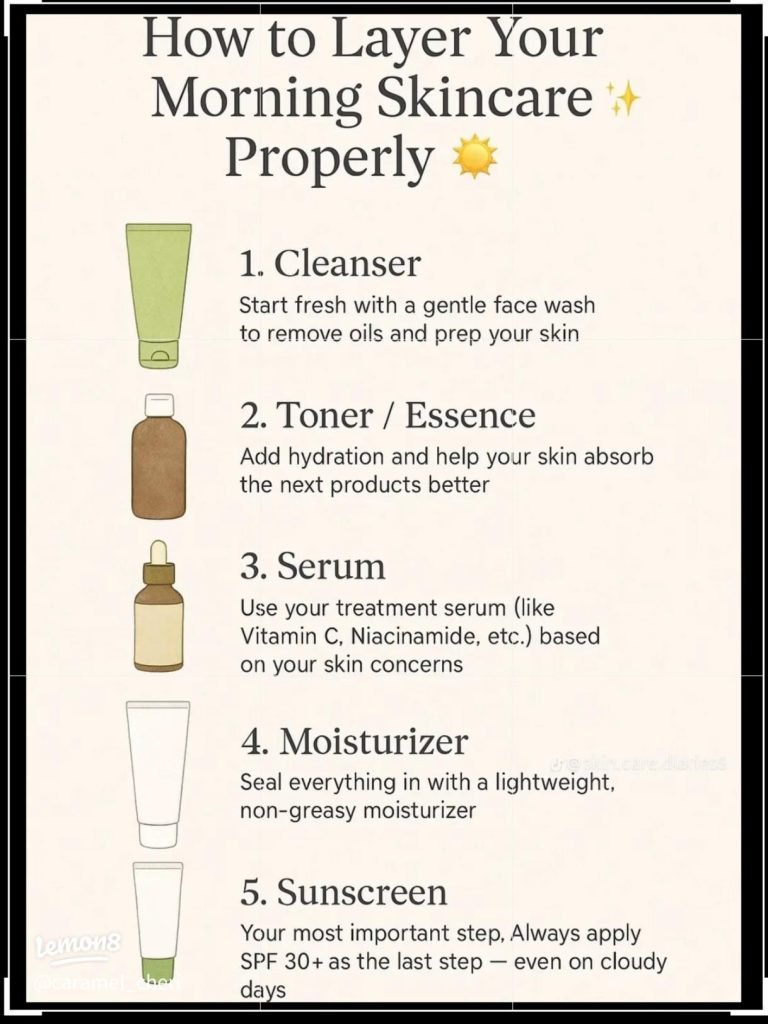
Credit: www.lemon8-app.com
Frequently Asked Questions
What Is The Correct Order For A Face Skincare Routine?
Start with cleansing to remove dirt. Follow with toner to balance skin pH. Apply serum for targeted treatment. Use moisturizer to hydrate. Finish with sunscreen in the morning to protect from UV rays.
How Often Should I Follow My Skincare Routine?
Follow your skincare routine twice daily—morning and night. Morning routine protects and prepares your skin. Night routine cleanses and repairs skin during sleep for best results.
Can I Skip Steps In My Skincare Routine?
Skipping steps may reduce effectiveness. Each step has a purpose: cleansing, treating, moisturizing, and protecting. Customize based on skin type, but avoid skipping cleansing and sunscreen for healthy skin.
When Should I Apply Sunscreen In My Routine?
Apply sunscreen as the last step in the morning routine. It protects your skin from harmful UV rays. Reapply every two hours when outdoors for continuous protection.
Conclusion
A good skincare routine keeps your face fresh and healthy. Cleanse first to remove dirt. Use toner to balance skin. Serum targets specific concerns. Moisturizer keeps skin hydrated. Sunscreen protects from harmful rays during the day. Consistent skincare improves skin over time.
Remember, each step matters. Choose products suitable for your skin type. Always listen to what your skin needs. Adjust as needed. Simple steps can make a big difference. Stick with it for best results. Your skin will thank you.