
Imagine standing in front of your bathroom mirror, holding a jar of luxurious face cream you crafted with your own hands. DIY skin care is not just a trend; it’s a revolution.
It invites you to take control of what touches your skin, using ingredients you trust. You don’t need a chemistry degree or a fortune to enjoy radiant skin. With simple, effective recipes and the right ingredients, you can create a routine that is uniquely yours.
Curious about how you can tailor your skincare to fit your needs and desires? Let’s delve into the world of DIY skin care, where you are the creator of your own beauty destiny.
Benefits Of Diy Skin Care
DIY skin care offers many benefits that help you take control of your beauty routine. Creating your own products means you know every ingredient inside. It also allows you to tailor treatments to what your skin really needs. Simple ingredients, less waste, and personal care make DIY skin care a smart choice.
Cost-effective Solutions
Making skin care products at home saves money. Store-bought items often include expensive packaging and marketing costs. DIY recipes use basic ingredients that cost less and last longer. You can make enough product for weeks or months at a low price. This approach reduces the need for frequent purchases.
Natural Ingredients And Their Effects
Natural ingredients bring gentle care to your skin. Many plants, oils, and extracts have vitamins and antioxidants. These help soothe, hydrate, and protect your skin. Avoiding harsh chemicals lowers the risk of irritation and allergies. Using fresh, pure ingredients supports healthier skin over time.
Customizing For Your Skin Type
Every skin type has unique needs. DIY skin care allows you to mix ingredients that fit your skin perfectly. Oily skin benefits from ingredients that control shine. Dry skin needs extra moisture and nourishment. Sensitive skin requires calming and simple components. Tailoring your routine helps improve skin health faster and more effectively.

Credit: www.desertnaturals.me
Essential Ingredients For Radiant Skin
Achieving radiant skin at home is more than just mixing random ingredients. It’s about choosing the right essentials that nourish, refresh, and calm your skin. Knowing what to add to your DIY skincare routine can make a noticeable difference in how your skin looks and feels.
Hydrating Elements
Hydration is the foundation of glowing skin. Ingredients like aloe vera gel, honey, and glycerin are natural humectants that draw moisture into your skin and keep it soft.
When I started using aloe vera in my homemade masks, I noticed my skin felt plumper and less dry even in cold weather. What hydrating ingredient have you tried that made your skin feel instantly refreshed?
Exfoliants For Smooth Skin
Exfoliating removes dead skin cells and reveals a fresh, smooth surface. Gentle options like finely ground oatmeal, sugar, or coffee grounds work well in DIY scrubs without causing irritation.
Try mixing a tablespoon of sugar with a bit of olive oil for a simple scrub. It’s easy to make and leaves your skin feeling clean and soft. How often do you exfoliate, and what’s your go-to ingredient?
Soothing Agents
Soothing ingredients calm redness and reduce inflammation. Chamomile tea, cucumber juice, and yogurt are fantastic for calming sensitive skin.
I once had a reaction to a new product, and applying a yogurt mask helped reduce the redness quickly. Do you have a favorite soothing ingredient that helps when your skin acts up?
Simple Recipes For Glowing Skin
Creating your own skin care products at home can be simple and fun. These recipes use natural ingredients that help your skin glow. They are easy to make and gentle on your skin. Try these recipes to brighten your face and keep it healthy.
Cleansers And Toners
Clean skin is the first step to glowing skin. Homemade cleansers remove dirt and oil without harsh chemicals. Natural toners balance your skin’s pH and tighten pores.
- Honey and Lemon Cleanser:Mix 1 tablespoon honey with 1 teaspoon lemon juice. Apply gently and rinse with warm water.
- Green Tea Toner:Brew green tea, cool it, and use as a toner with a cotton ball. Refreshes and soothes skin.
Moisturizers And Masks
Moisturizers keep your skin soft and hydrated. Masks give extra care and boost skin’s natural glow. Use ingredients that nourish and soothe.
- Aloe Vera Moisturizer:Use fresh aloe gel directly on the skin. It hydrates and calms irritation.
- Oatmeal and Yogurt Mask:Mix 2 tablespoons oatmeal with 3 tablespoons plain yogurt. Apply for 15 minutes, then rinse. Softens and brightens skin.
Serums And Oils
Serums and oils provide deep nourishment. They help repair and protect skin from damage.
- Vitamin C Serum:Mix 1 teaspoon vitamin C powder with 2 tablespoons distilled water. Store in a dark bottle and apply daily.
- Rosehip Oil:Apply a few drops of rosehip oil on clean skin. Helps reduce scars and improve skin texture.

Credit: foxtale.in
Daily Skin Care Routine
Creating a daily skin care routine helps keep your skin healthy and glowing. Simple habits every day can protect your skin from damage. Consistency is key to seeing long-lasting results. This routine includes steps for morning, evening, and weekly care.
Morning Rituals
Start with a gentle cleanser to remove impurities. Use lukewarm water to avoid drying out your skin. Apply a light moisturizer to keep your skin hydrated. Don’t forget sunscreen to protect from harmful UV rays. Choose a sunscreen with at least SPF 30. This helps prevent premature aging and sun damage.
Evening Care
Clean your face to remove dirt and makeup. Use a cleanser suited for your skin type. Apply a nourishing night cream to help skin repair overnight. Consider using products with ingredients like hyaluronic acid or vitamin E. These support skin hydration and healing. Avoid heavy creams if your skin is oily.
Weekly Treatments
Exfoliate once or twice a week to remove dead skin cells. Use a gentle scrub or a natural exfoliant like oatmeal. Apply a hydrating or detoxifying mask based on your skin needs. Masks can calm redness or brighten dull skin. Give your skin time to breathe and renew between treatments.
Tips For Maintaining Healthy Skin
Maintaining healthy skin requires simple daily habits. Consistent care helps keep skin bright and smooth. Focus on basic tips that nurture skin from inside out.
Hydration And Nutrition
Drink plenty of water every day. Water flushes out toxins and keeps skin moist. Eat fresh fruits and vegetables rich in vitamins. Foods with antioxidants protect skin from damage. Include healthy fats like nuts and seeds for better skin elasticity. Avoid too much sugar and processed food to prevent breakouts.
Sun Protection
Apply sunscreen before going outside, even on cloudy days. Sunscreen blocks harmful UV rays that cause skin aging. Wear hats and sunglasses to protect your face and eyes. Seek shade during peak sun hours, usually midday. Reapply sunscreen every two hours for full protection.
Stress Management
Stress can cause skin problems like acne and dullness. Practice relaxation techniques such as deep breathing or meditation. Get enough sleep to allow skin to repair itself. Exercise regularly to improve blood flow and reduce stress. Taking time for yourself improves skin health and overall well-being.
Common Mistakes To Avoid
DIY skin care can be rewarding, but it’s easy to make mistakes that hurt your skin instead of helping it. Knowing what to avoid keeps your routine effective and safe. Let’s look at some common errors people often overlook.
Over-exfoliating
Exfoliation removes dead skin cells, but too much can strip your skin’s natural barrier. Using scrubs or acids daily might cause redness, dryness, or even breakouts. Think about how often your skin feels sensitive or tight—are you exfoliating too often?
Try limiting exfoliation to two or three times a week. Listen to your skin’s response and adjust accordingly. Remember, gentle care often leads to better results than aggressive treatments.
Using Harsh Ingredients
Not all natural ingredients are safe for your skin. Strong substances like undiluted lemon juice or baking soda can disrupt your skin’s pH and cause irritation. I once tried a lemon mask that left my face burning for hours—definitely not worth it.
Choose ingredients known for their soothing and nourishing properties, such as honey or aloe vera. Always research or consult reliable sources before trying new components in your DIY recipes.
Ignoring Patch Tests
Skipping a patch test is a common but risky mistake. Even natural ingredients can cause allergic reactions or sensitivity. Testing a small area first helps you avoid unpleasant surprises on your face.
Apply your DIY mixture on your wrist or behind your ear and wait 24 hours. If no irritation appears, it’s safer to use on your face. This small step saves a lot of discomfort and wasted products.
Adapting Diy Skin Care For Different Skin Types
DIY skin care works best when it fits your skin type. Each skin type has different needs. Adjusting your recipes helps avoid problems and boosts results. This guide explains how to change DIY skin care for oily, dry, and sensitive skin.
Oily Skin Adjustments
Oily skin needs care that controls shine and clears pores. Use ingredients that absorb excess oil and reduce acne. Avoid heavy oils or creams that clog pores.
- Choose clay masks like bentonite or kaolin.
- Use tea tree oil for its antibacterial properties.
- Include lemon juice to balance oil and brighten skin.
- Opt for lightweight gels and water-based moisturizers.
Dry Skin Needs
Dry skin requires deep hydration and gentle care. Use nourishing oils and moisturizing ingredients to soothe and protect.
- Try natural oils like coconut, almond, or avocado oil.
- Add honey for its moisture-locking benefits.
- Include aloe vera to calm and hydrate skin.
- Use creamy masks with yogurt or mashed fruits.
Sensitive Skin Care
Sensitive skin needs mild, non-irritating ingredients. Avoid harsh chemicals or strong fragrances. Focus on calming and healing components.
- Use oatmeal as a gentle cleanser or mask base.
- Apply chamomile or green tea extracts for soothing effects.
- Include rose water to reduce redness and irritation.
- Test new recipes on a small skin patch first.
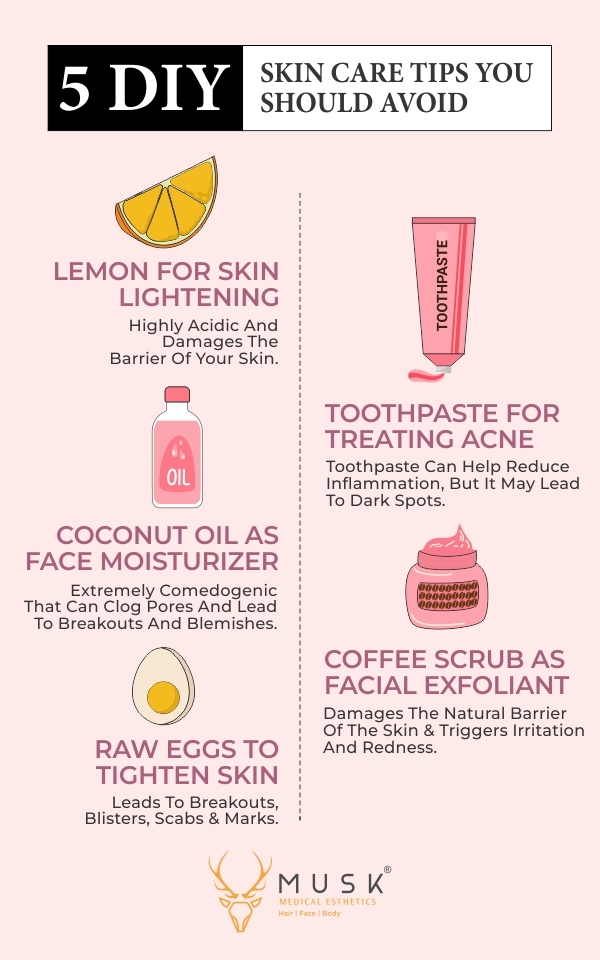
Credit: muskclinic.com
Frequently Asked Questions
What Are The Best Diy Skin Care Ingredients?
Natural ingredients like honey, aloe vera, coconut oil, and oatmeal are great. They soothe, hydrate, and exfoliate skin gently. These are safe for most skin types and easy to find. Using fresh ingredients ensures maximum benefits without harsh chemicals or preservatives.
How Often Should I Do Diy Skin Care Treatments?
DIY skin care treatments can be done 1-3 times per week. Overuse may irritate your skin. Always observe how your skin reacts. Adjust frequency based on skin type and sensitivity. Consistency is key for noticeable results.
Can Diy Skin Care Replace Professional Treatments?
DIY skin care complements but does not replace professional treatments. It helps maintain healthy skin between visits. For serious skin issues, consult a dermatologist. DIY methods are best for mild concerns like dryness or dullness.
Are Diy Skin Care Recipes Safe For Sensitive Skin?
Many DIY recipes use gentle, natural ingredients suitable for sensitive skin. Patch test first to avoid reactions. Avoid harsh ingredients like lemon or baking soda. Customize recipes to your skin’s needs for safe results.
Conclusion
DIY skin care offers a simple way to care for your skin at home. You can use natural ingredients that are safe and gentle. Making your own products lets you avoid harsh chemicals. It also saves money and feels rewarding.
Try small batches first to see how your skin reacts. Consistency matters more than fancy products. Healthy skin comes from good habits and patience. Enjoy the process and listen to your skin’s needs. Your skin will thank you for the extra care.
Simple steps can bring noticeable improvements over time.
