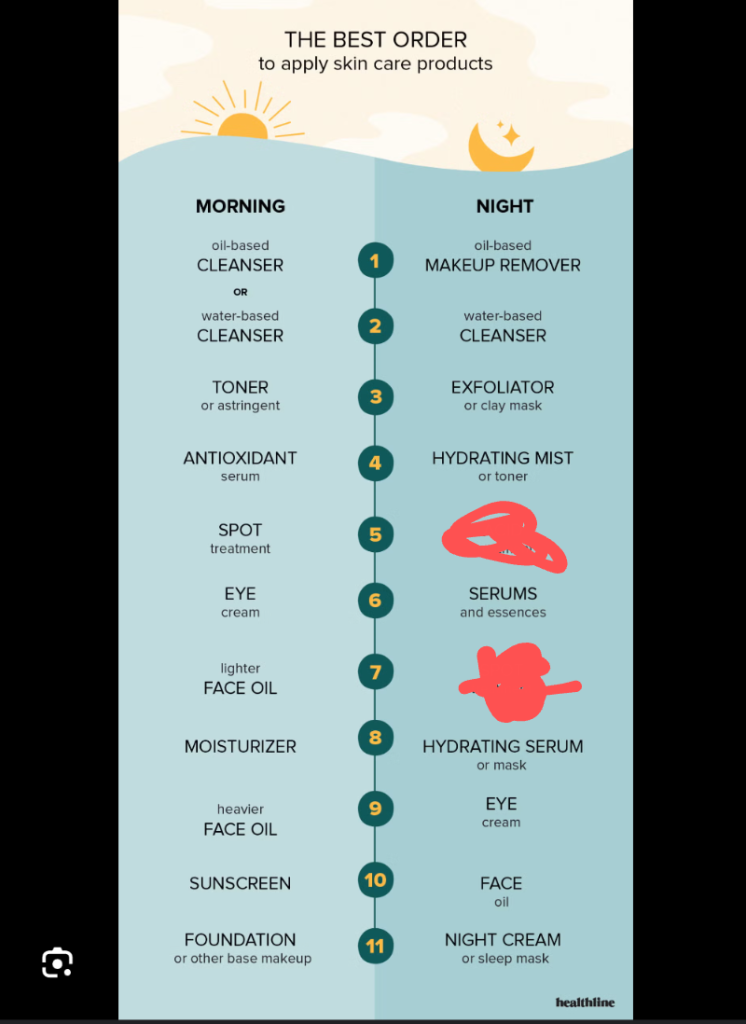
Are you unsure about the right order to apply your skincare products? Using them in the wrong sequence can reduce their effectiveness, leaving your skin less radiant than it could be.
Imagine waking up to a clearer, smoother, and healthier complexion just by following a simple, step-by-step routine. In this post, you’ll discover the exact full skincare routine order that helps your products work better and gives your skin the care it deserves.
Keep reading, and you’ll never have to guess which product comes next again.
Cleansing Basics
Cleansing is the first and most vital step in any skincare routine. It removes dirt, oil, and impurities that accumulate on the skin throughout the day. Proper cleansing prepares the skin to absorb other skincare products better. A clean face helps prevent breakouts and dullness. Choosing the right technique and products ensures healthy, glowing skin.
Choosing The Right Cleanser
Select a cleanser based on your skin type. For oily skin, use a foaming or gel cleanser to remove excess oil. Dry skin benefits from cream or lotion cleansers that hydrate. Sensitive skin needs gentle, fragrance-free formulas to avoid irritation. Check ingredients and avoid harsh chemicals. A good cleanser cleans without stripping natural oils.
Double Cleansing Method
Double cleansing involves two steps. First, use an oil-based cleanser to remove makeup and sunscreen. Then, follow with a water-based cleanser to clean sweat and dirt. This method ensures a deeper clean without over-drying. It works well for people wearing heavy makeup or living in polluted areas. Double cleansing leaves skin fresh and ready for treatment products.
Cleansing Frequency Tips
Cleanse your face twice daily: morning and night. Morning cleansing removes sweat and oils from sleep. Night cleansing clears away makeup, dirt, and pollutants. Avoid over-cleansing, which can dry out skin and cause irritation. Adjust frequency based on skin needs and environment. Always use lukewarm water to protect skin barrier during cleansing.

Credit: www.bellinispdx.com
Exfoliation Steps
Exfoliation is a key part of any skincare routine because it helps remove dead skin cells, revealing fresher, smoother skin underneath. It also clears pores, which can reduce breakouts and improve your skin’s texture. But how you exfoliate and how often you do it can make a big difference in your skin’s health.
Physical Vs Chemical Exfoliants
Physical exfoliants use small grains, beads, or brushes to manually scrub away dead skin. They give instant smoothness but can be harsh if used too aggressively. If you’ve ever felt your skin sting or turn red after scrubbing, that’s a sign to be gentler or try a different method.
Chemical exfoliants, on the other hand, use acids like AHAs (glycolic or lactic acid) or BHAs (salicylic acid) to dissolve dead skin cells without scrubbing. These can be more effective for unclogging pores and improving skin tone, especially if you have acne or uneven texture. Would you rather swipe on a gentle liquid or physically scrub your face?
How Often To Exfoliate
How often you exfoliate depends on your skin type and the exfoliant you choose. For most people, 2-3 times a week is enough to keep skin clear without causing irritation. Over-exfoliating can strip your skin’s natural oils, leading to dryness or increased sensitivity.
If your skin is oily or acne-prone, you might tolerate more frequent exfoliation with chemical exfoliants. Dry or sensitive skin types should stick to once a week or less and opt for gentler formulas. Pay attention to how your skin reacts and adjust accordingly—you’re the best judge.
Precautions For Sensitive Skin
Sensitive skin needs extra care during exfoliation to avoid redness, irritation, or flare-ups. Avoid physical scrubs with large, rough particles that can cause micro-tears. Instead, try mild chemical exfoliants with lower acid concentrations.
Patch test any new product before applying it to your whole face. If you notice burning, itching, or excessive redness, stop using it immediately. Remember, exfoliation should refresh your skin, not harm it—how does your skin usually respond to exfoliants?
Toning Benefits
Toning is often an overlooked step in your skincare routine, but it holds powerful benefits that can transform your skin’s health and appearance. It helps balance your skin’s pH, removes leftover impurities, and preps your skin to absorb serums and moisturizers better. Have you ever noticed how your skin feels tight or dry after cleansing? That’s where toner steps in to restore comfort and hydration.
Types Of Toners
Not all toners are created equal. Some are alcohol-based, designed to deeply cleanse and remove excess oil. These work best if you have oily or acne-prone skin but can be harsh if your skin is dry or sensitive.
Hydrating toners contain ingredients like glycerin or hyaluronic acid to add moisture. They’re gentle and perfect for dry or combination skin types. You might find toners with soothing agents like aloe vera or rose water, which calm redness and irritation.
Exfoliating toners include acids such as glycolic or salicylic acid. These help remove dead skin cells and clear pores. If you’ve struggled with dull or congested skin, exfoliating toners can make a noticeable difference.
Applying Toner Effectively
How you apply toner can affect its benefits. Use a cotton pad or your hands, depending on the toner’s texture and your preference. Patting toner onto your skin instead of rubbing prevents irritation and helps the product absorb better.
Apply toner right after cleansing while your skin is still slightly damp. This helps lock in moisture and keeps your skin fresh. Avoid overusing toner; too much can strip your skin and cause dryness.
Have you ever skipped toner and noticed your moisturizer didn’t absorb well? Adding this step creates a smooth base for the rest of your routine. Try to listen to your skin’s response and adjust how often you apply toner accordingly.
Credit: www.lemon8-app.com
Serums And Treatments
Serums and treatments form a powerful part of your skincare routine. They target specific skin concerns with concentrated ingredients. Applying them correctly helps you get the best results. These products are lighter than creams and absorb quickly. Their active ingredients work deep in the skin to improve texture, tone, and clarity.
Selecting Targeted Serums
Choose serums based on your skin needs. Common targets include hydration, brightening, and anti-aging.
- For dry skin, pick serums with hyaluronic acid.
- To reduce dark spots, use vitamin C serums.
- For fine lines, opt for peptides or retinol.
Read labels to understand each serum’s purpose. Avoid too many active ingredients that may irritate.
Layering Multiple Serums
Use lightest to heaviest serum texture. Start with watery serums, then thicker ones.
- Apply one or two serums max to avoid clogging pores.
- Give each layer a minute to absorb before the next.
- Mixing acids or retinol can cause irritation; use them on alternate days.
Proper layering helps ingredients absorb better and work well together.
Spot Treatments For Blemishes
Apply spot treatments only on pimples or problem areas.
- Use treatments with benzoyl peroxide or salicylic acid.
- Don’t spread on large skin areas to avoid dryness.
- Apply after serums and before moisturizer for best effect.
Spot treatments reduce redness and speed up healing of blemishes.
Moisturizing Tips
Moisturizing is a crucial step in any skincare routine, but getting it right can be tricky. Your skin needs the right kind of moisture at the right time to stay healthy and glowing. Let’s look at some tips to help you choose and use moisturizers effectively.
Picking The Right Moisturizer
Choosing a moisturizer is more than just grabbing the first bottle you see. You need to think about your skin’s specific needs and concerns.
- Look for ingredients that match your skin type.For dry skin, ingredients like hyaluronic acid or glycerin work well. Oily skin benefits from lightweight, non-comedogenic formulas.
- Consider any skin sensitivities.If your skin is sensitive, avoid fragrances and alcohol-based products that may cause irritation.
- Test before committing.Try a small amount on your jawline to see how your skin reacts.
Have you ever bought a moisturizer that left your skin feeling greasy or tight? That’s a sign you need to rethink your choice.
Day Vs Night Moisturizers
Moisturizers aren’t one-size-fits-all throughout the day. Your skin behaves differently during daylight and while you sleep.
- Day moisturizersoften contain SPF to protect against sun damage. They tend to be lighter to avoid clogging pores under makeup.
- Night moisturizersare richer and focus on repair and hydration. Ingredients like retinol or peptides are common for overnight skin renewal.
Using a night cream during the day might feel heavy, while a day moisturizer may not provide enough hydration at night. Have you noticed a difference in your skin when switching between them?
Hydration For Different Skin Types
Not all skin types need the same level of hydration. Understanding your skin’s unique needs can change how you approach moisturizing.
| Skin Type | Hydration Needs | Recommended Moisturizer Type |
|---|---|---|
| Dry | High hydration, barrier repair | Rich creams with oils and emollients |
| Oily | Light hydration, oil control | Gel-based, non-comedogenic lotions |
| Combination | Balanced hydration, targeted areas | Light lotion with spot treatment for dry patches |
| Sensitive | Gentle hydration, calming agents | Fragrance-free, hypoallergenic creams |
Think about your skin right now—does it feel tight, oily, or just right? Adjusting your moisturizer based on how your skin acts can make a big difference in how it looks and feels.
Sun Protection
Sun protection is a vital part of any skincare routine. It shields your skin from harmful UV rays that cause damage. Daily use of sunscreen helps prevent sunburn, early aging, and skin cancer.
Even on cloudy days, UV rays can harm your skin. Applying sunscreen creates a barrier that blocks these rays. It keeps your skin healthy and glowing over time.
Choosing Sunscreen Spf
Pick a sunscreen with at least SPF 30 for daily use. SPF 30 blocks about 97% of UVB rays. For longer sun exposure, choose higher SPF like 50.
Look for broad-spectrum sunscreens. They protect against both UVA and UVB rays. Sunscreens come in many forms: lotions, gels, sprays, and sticks. Choose the one that feels best on your skin.
Proper Sunscreen Application
Apply sunscreen as the last step in your morning skincare routine. Use enough to cover all exposed skin. A good rule is one teaspoon for your face and neck.
Don’t forget ears, lips, and the back of your neck. Apply sunscreen 15 to 30 minutes before going outside. This lets it absorb properly and work well.
Reapplying Throughout The Day
Sunscreen wears off after a few hours. Reapply every two hours, especially if you sweat or swim. Use the same amount each time to keep protection strong.
Carry a small sunscreen bottle or stick for easy reapplication. Protecting your skin all day keeps it safe from damage and dryness.
Additional Skincare Steps
Adding extra steps to your skincare routine can make a noticeable difference in your skin’s health and appearance. These additional treatments target specific concerns and boost your skin’s overall glow. Let’s look at some simple ways to enhance your routine beyond the basics.
Face Masks For Extra Glow
Using a face mask once or twice a week can deeply nourish your skin and provide an instant boost. Choose masks based on your skin type—hydrating masks for dry skin, clay masks for oily skin, and soothing masks for sensitive skin.
I once tried a turmeric mask and noticed my skin looked brighter the next day. It’s a quick way to refresh your complexion without spending hours on skincare. Have you ever tried a mask that gave you surprising results?
Eye Cream Application
The skin around your eyes is delicate and needs special care. Apply a small amount of eye cream using your ring finger to gently pat the product in, avoiding harsh rubbing.
Look for eye creams with ingredients like hyaluronic acid or caffeine to reduce puffiness and fine lines. Consistent use can make your eyes appear more awake and refreshed, especially after a long day.
Facial Oils And When To Use Them
Facial oils can lock in moisture and add a radiant finish to your skin. Use them after your moisturizer if you have dry skin, or mix a drop with your foundation for a dewy look.
- Oily skin types should opt for lightweight, non-comedogenic oils like jojoba or grapeseed.
- Dry skin benefits from richer oils like argan or rosehip.
Have you noticed how a few drops of oil can transform your skin’s texture? Experiment with timing and amount to find what works best for your routine.

Credit: www.reddit.com
Customizing Your Routine
Customizing your skincare routine helps target your unique skin needs. Every person has different skin types and concerns. A flexible routine supports skin health and improves results.
Adjust your products and steps based on changes in your skin. Small tweaks can make a big difference. Personalizing your routine also prevents irritation and keeps skin balanced.
Adjusting For Skin Concerns
Identify your main skin issues first. Common concerns include dryness, acne, sensitivity, and aging. Choose products with ingredients that address these problems.
- For dry skin, add hydrating serums and creams.
- For acne, use gentle exfoliants and spot treatments.
- For sensitive skin, avoid harsh chemicals and fragrances.
- For aging skin, include antioxidants and peptides.
Change your routine gradually to see how your skin reacts. Avoid using too many active ingredients at once.
Seasonal Routine Changes
Skin needs vary with seasons and weather. Cold, dry air can cause flakiness, while hot weather may increase oiliness.
- Switch to richer moisturizers in winter for extra hydration.
- Use lighter, oil-free products in summer to prevent clogging.
- Increase sunscreen use during sunny months.
- Adjust cleansing frequency to manage sweat and oil.
Observe how your skin feels and adapt your routine accordingly.
Incorporating New Products Safely
Introduce new products one at a time. This helps identify any reactions or allergies. Test the product on a small skin area before full use.
- Start with a patch test on your wrist or behind the ear.
- Wait 24 hours to check for redness or irritation.
- Add the product to your routine slowly, every few days.
- Watch for any changes in skin texture or color.
Stop use immediately if irritation occurs. Gradual introduction protects your skin and keeps it healthy.
Frequently Asked Questions
What Is The Correct Order For A Full Skincare Routine?
Start with cleansing, then tone to balance skin. Apply serums, moisturizers, and finish with sunscreen. Follow this order for effective absorption and skin benefits.
Should I Apply Serum Before Or After Moisturizer?
Apply serum before moisturizer. Serums are lightweight and deliver active ingredients deeply. Moisturizers lock in hydration and protect the skin barrier.
How Often Should I Follow A Full Skincare Routine?
Follow your full skincare routine twice daily—morning and night. Consistency ensures better skin health, hydration, and protection from environmental damage.
Can I Skip Steps In A Skincare Routine?
Skipping steps can reduce effectiveness. Each product plays a key role in cleansing, treating, hydrating, and protecting your skin. Customize but don’t skip essentials.
Conclusion
A clear skincare routine keeps your skin healthy and glowing. Start with a gentle cleanser to remove dirt. Follow with a toner to refresh. Use a serum for targeted treatment. Moisturize to lock in hydration. Don’t forget sunscreen during the day.
Each step builds on the last, creating a strong foundation. Consistency is key. Stick to this order for best results. Simple steps, big impact. Your skin will thank you. Enjoy the journey to better skin. Remember, every step counts. Keep it simple, keep it effective.
