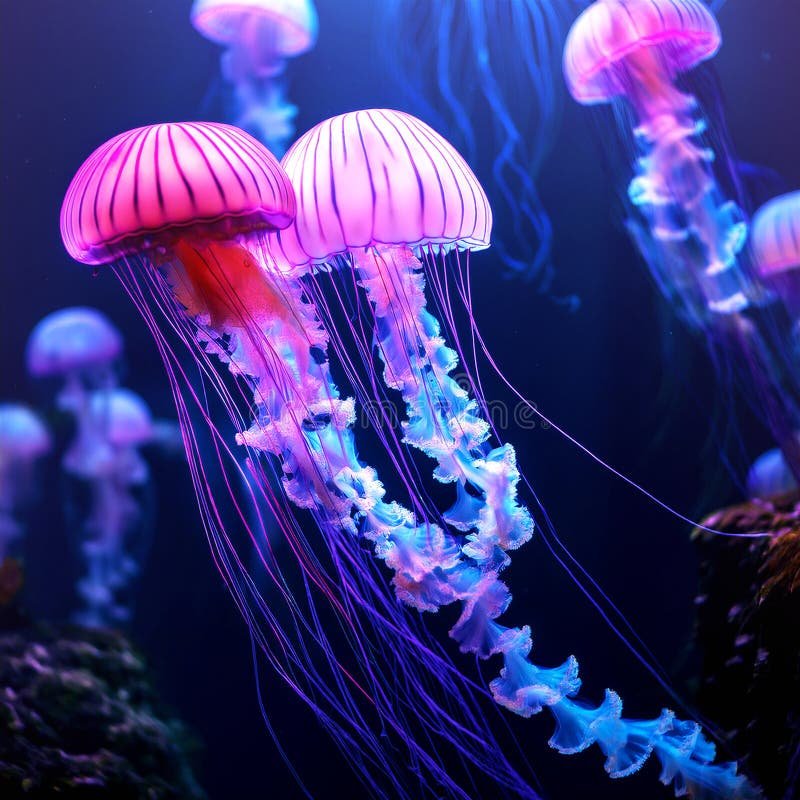
Imagine walking through a world of magic, where creatures glow like stars and glide effortlessly through their realm. Picture a serene underwater ballet, where every movement is a dance of light and grace.
That’s the enchanting world of jellyfish, nature’s luminous wonders. Have you ever wondered what makes jellyfish so mesmerizing? Their ethereal glow isn’t just for show; it’s a marvel of nature that captivates anyone who sees it. By reading on, you’ll uncover the secrets behind their beautiful glow, learn how they illuminate the ocean depths, and discover why they captivate our imagination.
Dive into this fascinating exploration, and let your curiosity lead the way.

Credit: www.dreamstime.com
Glowing Jellyfish Basics
Glowing jellyfish captivate with their eerie, mesmerizing light. Understanding the basics helps you appreciate their natural glow beyond just its beauty. Let’s dive into what makes these creatures shine so brightly in the dark ocean depths.
Types Of Bioluminescent Jellyfish
Not all jellyfish light up in the same way. Different species produce light for various reasons, such as attracting prey or defending themselves.
- Aequorea victoria: Known for its green glow, this jellyfish inspired the development of green fluorescent protein (GFP), widely used in scientific research.
- Atolla wyvillei: This deep-sea jellyfish flashes bright blue light when disturbed, possibly to scare off predators.
- Pelagia noctiluca: Common in warm waters, it produces a purple bioluminescence that can light up entire beaches during blooms.
Have you ever wondered why some jellyfish glow green while others shine blue or purple? The colors often depend on the chemicals they use and their habitat.
How Jellyfish Produce Light
Jellyfish create light through a chemical reaction inside their bodies. This process is called bioluminescence.
Special molecules called luciferins react with oxygen, catalyzed by enzymes known as luciferases. This reaction releases energy in the form of light.
Interestingly, some jellyfish use tiny structures called photoproteins that emit light when triggered by calcium ions. This biological light is energy-efficient and can last for several seconds.
Next time you see glowing jellyfish in an aquarium or nature, think about this delicate chemistry happening inside their bodies. Would you like to try observing their light in a dark tank to see the magic firsthand?

Credit: www.dreamstime.com
Colors And Patterns
The colors and patterns of glowing jellyfish captivate anyone lucky enough to witness them. These delicate creatures light up the ocean with a range of hues and designs that are both mesmerizing and mysterious. Understanding their colors and patterns helps you appreciate how they survive and communicate in their underwater world.
Common Glow Colors
Glowing jellyfish often show colors like blue, green, and purple. These colors come from special chemicals and proteins inside their bodies that produce light. Blue is the most common because it travels farthest underwater, helping jellyfish attract mates or warn predators.
Sometimes, you might spot jellyfish glowing with red or orange shades, which are less common but just as stunning. These colors can signal different things, such as danger or readiness to reproduce. Have you ever wondered why some jellyfish light up in certain colors while others don’t?
Unique Light Patterns
Each jellyfish species has its own light pattern that makes it unique. Some display steady glows, while others flash or pulse rhythmically. These patterns can help jellyfish communicate or confuse predators.
One fascinating pattern is the ring of light around the bell, which can expand and contract like a heartbeat. Another is the scattered dots along the tentacles, creating a sparkling effect. Next time you see a glowing jellyfish, try to notice if its light is steady or flickering—you might be witnessing its way of ‘talking’ underwater.
Jellyfish Habitats
Jellyfish glow in many parts of the ocean. Their habitats vary widely, from shallow waters to the deep sea. These glowing creatures adapt to different environments. Their light helps them survive and communicate in dark waters. Understanding where jellyfish live reveals much about their glowing beauty.
Where To Find Glowing Jellyfish
Glowing jellyfish live in many ocean zones. Some prefer warm coastal areas. Others thrive in cold, deep waters. You can find them near shores, floating with currents. Some species gather in groups called blooms. These blooms can light up coastal waters at night.
Tourist spots sometimes offer night tours to see glowing jellyfish. Bioluminescent bays and lagoons are famous for these displays. These places provide calm, nutrient-rich water. Jellyfish use this to feed and reproduce.
Deep Sea Vs Coastal Lights
| Deep Sea | Coastal Waters |
|---|---|
| Very dark environment | Light varies with day and weather |
| Jellyfish glow to attract prey | Glow helps hide from predators |
| Cold, high pressure | Warmer, lower pressure |
| Species often small and slow | Species larger and faster |
| Less food available | More plankton and nutrients |
Deep sea jellyfish use light mainly to lure food. Coastal jellyfish use glow for defense and communication. Both habitats shape how jellyfish look and behave.
Role Of Glow In Survival
The glowing light of jellyfish is not just a beautiful display—it plays a crucial role in their survival under the sea. This natural glow helps jellyfish interact with their environment in unique ways that increase their chances of finding food and avoiding danger. Understanding how this glow works can change the way you see these delicate creatures.
Attracting Prey
Jellyfish use their glow as a clever tool to lure prey closer. The light acts like a beacon in the dark ocean, drawing small fish and plankton towards them. This makes it easier for jellyfish to catch their next meal without expending much energy.
Have you ever wondered how something so simple can be so effective in hunting? The glow mimics the appearance of smaller creatures or food sources, tricking prey into approaching. This strategy is especially useful in deep waters where sunlight barely reaches.
Defense Mechanisms
The glow also serves as a warning signal to potential predators. When threatened, some jellyfish increase their brightness to startle or confuse attackers. This sudden flash of light can give the jellyfish a chance to escape.
In some cases, the glow attracts bigger predators that might scare off the jellyfish’s immediate threat. This unexpected twist shows how complex and smart survival tactics in nature can be. Next time you see a glowing jellyfish, think about the powerful message it sends to stay safe.
Jellyfish And Ocean Ecosystems
Jellyfish play a vital role in ocean ecosystems. Their presence affects many marine life forms. These glowing creatures influence food chains and interact with various species. Understanding these roles helps us appreciate their importance in the sea.
Impact On Marine Food Chains
Jellyfish are both predators and prey in the ocean. They feed on small fish, plankton, and larvae. This controls the population of these tiny creatures. At the same time, jellyfish serve as food for larger animals like sea turtles and some fish.
Their movements can also affect nutrient cycles. When jellyfish die, their bodies sink and nourish the ocean floor. This supports deep-sea life and helps maintain balance in the ecosystem.
Interactions With Other Species
Jellyfish often share space with many sea animals. Some fish swim near jellyfish to find protection from predators. Others may use jellyfish as a food source or for shelter.
In some cases, jellyfish can compete with fish for food. This competition may influence fish populations and behavior. Jellyfish blooms can sometimes disrupt local ecosystems by outnumbering other species.
Capturing Jellyfish Glow
Capturing the mesmerizing glow of jellyfish can be both challenging and rewarding. Their delicate, translucent bodies emit a subtle light that often fades quickly, making timing and technique crucial. Whether you’re photographing in an aquarium or in the wild, understanding how to highlight their glow is key to stunning images.
Photography Tips
To capture jellyfish glow effectively, use a camera with good low-light performance. A higher ISO setting helps, but avoid going too high to prevent grainy photos.
Try using a macro lens to get close-up shots that reveal intricate details of the jellyfish’s bioluminescence. Keep your shutter speed slow enough to gather light but fast enough to avoid blur from movement.
Lighting is critical. Use soft, diffused light or the aquarium’s blue lighting to enhance their natural glow without washing it out. Have you experimented with different angles to catch their light from unique perspectives?
Aquarium Displays
Aquariums offer controlled environments that make photographing glowing jellyfish easier. Look for tanks with dark backgrounds to create contrast and make the jellyfish stand out.
Many aquariums use special lighting setups to enhance the jellyfish’s glow. Pay attention to these settings and adjust your camera accordingly.
Observe how the jellyfish move in the water. Capturing them during slow, graceful motions often results in the most captivating images. Have you noticed how their glow intensifies near certain light sources?
Conservation Concerns
Beautiful glowing jellyfish light up the ocean with their delicate glow. These creatures face serious conservation challenges. Protecting their populations is essential for ocean health and biodiversity. Understanding these concerns helps us appreciate their fragile existence.
Threats To Jellyfish Populations
Jellyfish face many threats in their natural habitats. Pollution harms their delicate bodies and disrupts ocean balance. Overfishing removes their predators and prey, causing food chain issues. Climate change alters water temperature and acidity, affecting jellyfish survival. Coastal development destroys breeding and feeding areas. These threats reduce jellyfish numbers and impact glowing species especially.
Protecting Glowing Species
Efforts to protect glowing jellyfish focus on habitat preservation and reducing pollution. Marine protected areas can safeguard critical zones. Reducing plastic waste lowers risks of injury and ingestion. Sustainable fishing practices help maintain balanced ecosystems. Scientists study glowing jellyfish to understand their needs better. Public awareness encourages support for conservation actions. Together, these steps give glowing jellyfish a better chance to thrive.

Credit: stockcake.com
Frequently Asked Questions
What Causes Jellyfish To Glow Beautifully?
Jellyfish glow due to bioluminescence, a chemical reaction in their bodies. This light helps them attract prey and avoid predators.
How Do Glowing Jellyfish Benefit Marine Ecosystems?
Glowing jellyfish support marine food webs by providing food for predators. Their light also helps balance underwater ecosystems by influencing animal behavior.
Are All Jellyfish Capable Of Glowing?
Not all jellyfish glow. Only certain species have bioluminescent abilities, which depend on their environment and evolutionary traits.
Can Glowing Jellyfish Be Kept In Home Aquariums?
Yes, but glowing jellyfish require specific tank conditions and care. Proper lighting, water quality, and diet are essential for their survival.
Conclusion
Glowing jellyfish light up the ocean in a magical way. Their beauty draws many to learn and explore. Watching them can bring calm and wonder to anyone. These creatures show how nature can shine with soft light. Protecting their homes helps keep the oceans healthy and bright.
Take time to appreciate these glowing wonders under the sea. Their gentle glow reminds us of nature’s quiet, simple beauty. Keep curiosity alive and enjoy the magic of jellyfish.
