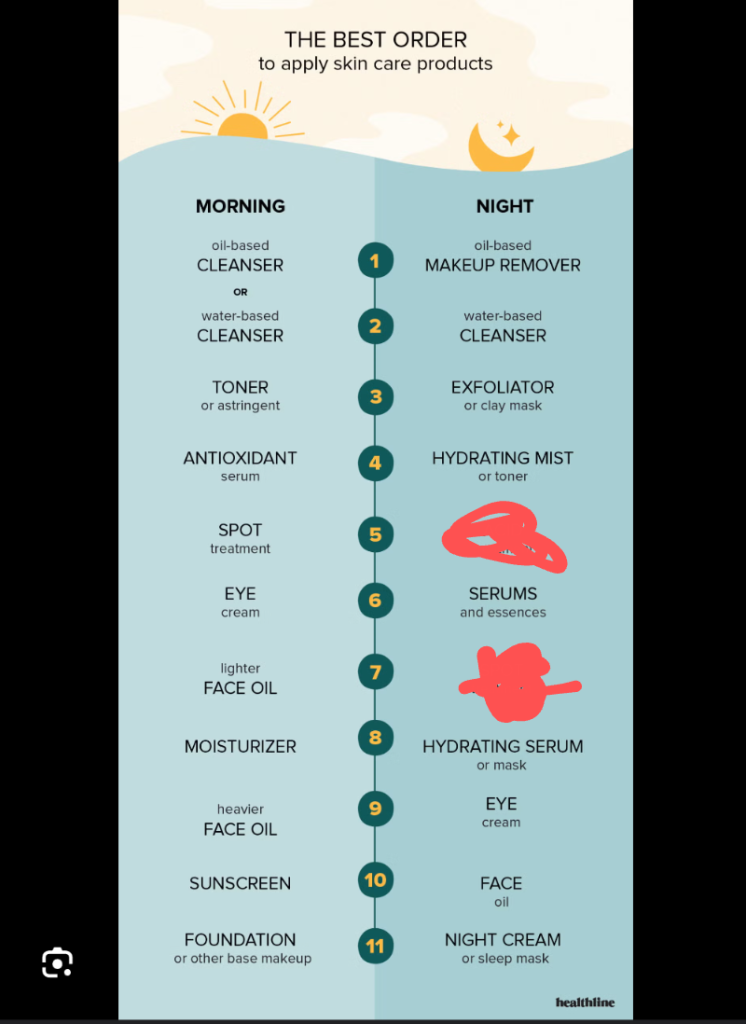
Want glowing, healthy skin but feel lost about where to start? Your skincare routine in order can make all the difference.
When you follow the right steps, each product works better, and your skin shows real improvement. Imagine waking up to a fresh, clear face every day—sounds great, right? Keep reading to discover the simple, effective order you need to get the most out of your skincare products and finally see the results you want.

Credit: www.reddit.com
Cleansing Basics
Cleaning your face is the first and most important step in any skincare routine. It removes dirt, oil, and impurities from the skin. Proper cleansing prepares your skin for other products. It helps keep your skin fresh and healthy. Skipping this step can cause clogged pores and breakouts.
Choosing The Right Cleanser
Select a cleanser based on your skin type and needs. For oily skin, use a foaming or gel cleanser. Dry skin benefits from creamy or hydrating cleansers. Sensitive skin requires gentle, fragrance-free formulas. Avoid harsh soaps that strip natural oils. Test new cleansers on a small skin area first.
Morning Vs Evening Cleansing
Morning cleansing removes sweat and oil produced overnight. Use a gentle cleanser to refresh the skin. Evening cleansing clears makeup, dirt, and pollution. It is important to clean thoroughly but gently. Over-cleansing can irritate and dry out skin. Adjust your routine based on your skin’s reaction.
Exfoliation Tips
Exfoliation is a key step in any skincare routine that helps remove dead skin cells and reveal a fresher, brighter complexion. However, knowing how to exfoliate properly can make a big difference in your skin’s health. Let’s dive into some practical exfoliation tips to help you get the best results without causing irritation.
Physical Vs Chemical Exfoliants
Physical exfoliants use small granules or tools to manually scrub away dead skin cells. They provide immediate smoothness but can be harsh if used too aggressively. For example, using a rough scrub daily might cause redness or micro-tears in sensitive skin.
Chemical exfoliants use acids like AHAs (glycolic, lactic) or BHAs (salicylic acid) to dissolve dead skin cells gently. They work beneath the surface and often improve skin texture over time without the risk of abrasion. If you struggle with clogged pores or acne, a BHA exfoliant can be especially helpful.
Choosing between physical and chemical exfoliants depends on your skin type and concerns. Have you noticed whether your skin reacts better to gentle acids or physical scrubs?
How Often To Exfoliate
Exfoliating too often can strip your skin’s natural oils and cause irritation. Most skin types benefit from exfoliation 2-3 times per week. If you have sensitive or dry skin, once a week might be enough to avoid redness and dryness.
On the other hand, oily or acne-prone skin can tolerate more frequent exfoliation, but be careful not to overdo it. Pay attention to how your skin feels after exfoliating; if it feels tight or sore, give it a break.
What’s your skin telling you after exfoliation? Listening to your skin’s response is the best guide for timing your exfoliation routine.
Toning Benefits
Toning is an important step in any skincare routine. It helps balance the skin’s pH and removes leftover dirt or makeup. Toners also prepare the skin to absorb moisturizers and serums better. Using a toner can refresh your skin and tighten pores for a smoother look.
Types Of Toners
Toners come in different types to suit various skin needs. Here are common types:
- Hydrating Toners:Add moisture and soothe dry skin.
- Astringent Toners:Control oil and reduce shine, best for oily skin.
- Exfoliating Toners:Contain acids to gently remove dead skin cells.
- Calming Toners:Reduce redness and irritation, good for sensitive skin.
Applying Toner Correctly
Use a cotton pad or your hands to apply toner. Gently swipe it over your face and neck. Avoid rubbing hard to prevent irritation. Let the toner dry before adding other products. Use toner twice daily for best results.

Credit: www.bellinispdx.com
Serum Selection
Choosing the right serum can transform your skincare routine. Serums deliver powerful ingredients deep into your skin, targeting specific concerns like wrinkles, dullness, or acne. But with so many options available, how do you find the best one for your skin?
Popular Serum Ingredients
Understanding what ingredients do helps you pick a serum that works for your needs. Here are some popular ones:
- Vitamin C:Brightens skin and evens out tone.
- Hyaluronic Acid:Hydrates and plumps skin.
- Retinol:Reduces fine lines and improves texture.
- Niacinamide:Calms redness and strengthens skin barrier.
- Peptides:Promote collagen production for firmer skin.
Have you tried any of these? Noticing which ingredients make your skin glow can guide your serum choices.
Layering Serums Effectively
Using multiple serums can be tricky. Applying them in the wrong order can reduce their effectiveness or irritate your skin.
Follow this simple rule: apply serums from thinnest to thickest texture. This helps your skin absorb each one properly.
- Start with water-based serums like hyaluronic acid.
- Next, apply treatment serums such as vitamin C or niacinamide.
- Finish with thicker serums or oils.
Have you ever felt your skin getting overwhelmed after too many products? Sticking to this order can prevent that and maximize benefits.
Moisturizing Steps
Moisturizing is a key part of any skincare routine. It keeps your skin hydrated, balanced, and protected. Skipping this step can leave your skin dry, flaky, or oily, depending on your skin type.
Choosing the right moisturizer and knowing when to apply it can make a big difference. Let’s look at how to pick the best moisturizer for your skin and why daytime and nighttime products are not the same.
Choosing Moisturizers For Skin Types
Your skin type guides which moisturizer you should use. If you have oily skin, look for lightweight, oil-free formulas that won’t clog pores. Gel-based moisturizers work well because they hydrate without feeling heavy.
Dry skin demands richer creams with ingredients like hyaluronic acid or ceramides to lock in moisture. If your skin is sensitive, choose products with calming ingredients such as aloe vera or chamomile to avoid irritation.
Combination skin means you might need two different moisturizers or a balanced formula that hydrates without making your oily areas shine. Have you ever tried applying different moisturizers to different parts of your face? It can really improve how your skin feels.
Daytime Vs Nighttime Moisturizers
Day moisturizers often contain SPF to protect your skin from sun damage. They are usually lighter to wear comfortably under makeup or during active hours. Many also have antioxidants to fight pollution effects.
Nighttime moisturizers focus on repair and hydration. They tend to be thicker and contain ingredients like retinol or peptides that help skin regenerate while you sleep. Using a heavy moisturizer during the day might feel greasy but can be perfect for overnight nourishment.
Think about your daily activities and skin needs. Would a single moisturizer work for both day and night, or does your skin benefit from tailored care? Experimenting can help you find what suits your skin best.
Sun Protection
Sun protection is a crucial part of any skincare routine. It shields your skin from harmful UV rays that can cause premature aging, sunburn, and increase the risk of skin cancer. Skipping this step can undo all the effort you put into caring for your skin.
Spf Importance
SPF, or Sun Protection Factor, measures how well a sunscreen protects against UVB rays, the main cause of sunburn. Using an SPF of at least 30 is recommended for everyday use, even on cloudy days. Higher SPF values offer more protection, but no sunscreen blocks 100% of UV rays.
Think about your daily activities—do you spend time outdoors, or are you mostly inside? If you’re often outside, a broad-spectrum sunscreen that protects against both UVA and UVB rays is essential. UVA rays penetrate deeper and contribute to aging and long-term skin damage.
Applying Sunscreen Properly
Many people apply too little sunscreen, which reduces its effectiveness. Use about a nickel-sized amount for your face and more for other exposed areas. Don’t forget spots like your ears, neck, and the back of your hands.
Apply sunscreen at least 15 minutes before going outside to let it absorb properly. Reapply every two hours, or immediately after swimming or sweating. If you’re wearing makeup, consider sunscreen sprays or powders for easy reapplication throughout the day.
Have you checked your sunscreen’s expiration date lately? Old sunscreen loses its potency and may not protect you adequately. Keeping track of this simple detail can make a big difference in your skin health.
Additional Treatments
Additional treatments enhance your skincare routine by targeting specific needs. They improve skin texture, clarity, and health. Use these treatments after cleansing and before moisturizing for best results.
Face Masks
Face masks offer deep cleansing and hydration. Choose masks based on your skin type and concerns. Clay masks absorb oil and impurities. Hydrating masks add moisture and soothe dry skin.
- Apply masks 1-2 times a week.
- Leave on for 10-15 minutes.
- Rinse with lukewarm water.
Regular use helps maintain a clear and glowing complexion.
Spot Treatments
Spot treatments target blemishes and acne directly. They contain active ingredients like salicylic acid or benzoyl peroxide. Apply only on affected areas to reduce redness and swelling.
- Use after cleansing and drying your face.
- Apply a small amount on the spot.
- Allow to absorb before applying moisturizer.
Consistent use helps heal pimples faster and prevents new breakouts.
Credit: www.lemon8-app.com
Routine Tips
Maintaining a skincare routine requires some useful tips to get the best results. Small habits can make a big difference in skin health. Sticking to the routine and adjusting it when needed helps skin stay clear and fresh. Here are two important tips to keep in mind.
Consistency And Patience
Following your skincare steps every day is key. The skin needs time to react to products. Results do not happen overnight. Daily care builds a strong skin barrier. Skipping days can slow progress and cause issues. Be patient and give products at least a few weeks. Trust the process and keep your routine simple and steady.
Adapting Routine For Seasons
Skin changes with the weather and seasons. Winter can dry out skin, while summer may cause more oil. Adjust your routine to match these changes. Use heavier moisturizers in cold months. Switch to lighter products during hot days. Protect your skin with sunscreen all year. Seasonal changes need small tweaks to keep skin balanced and healthy.
Frequently Asked Questions
What Is The Correct Order For A Skincare Routine?
The correct skincare order is cleanser, toner, serum, moisturizer, and sunscreen. This ensures maximum absorption and protection for your skin.
How Often Should I Follow My Skincare Routine?
Follow your skincare routine twice daily—morning and night. Consistency is key to achieving healthy and glowing skin.
Can I Skip Steps In My Skincare Routine?
Skipping steps reduces your skincare routine’s effectiveness. Each step plays a vital role in cleansing, hydrating, and protecting your skin.
When Should I Apply Sunscreen In My Routine?
Apply sunscreen last, after moisturizer, in the morning. It protects skin from harmful UV rays and prevents premature aging.
Conclusion
A well-ordered skincare routine makes a big difference. Start with a gentle cleanser. Then, use toner to refresh. Moisturizer locks in hydration. Sunscreen protects your skin from the sun. Each step helps your skin stay healthy. Consistency is key. Stick to your routine daily.
Simple habits lead to glowing skin. Don’t forget to adjust for your skin type. Everyone’s skin is unique. Listen to your skin’s needs. Your skin will thank you. Stay patient and positive. Results take time but are worth it. Enjoy the journey to healthier skin.
