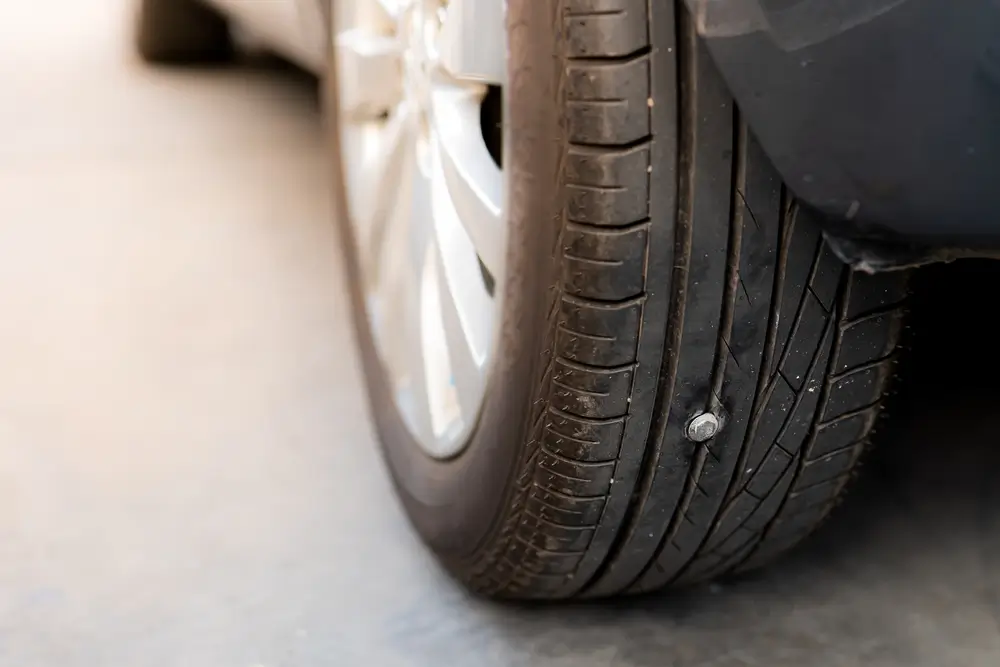
Picture this: you’re rushing to an important meeting or eagerly heading out for a weekend getaway, and then it happens—a nail in your car tire. A small, seemingly harmless piece of metal has the power to disrupt your day and mess with your plans.
You’ve probably felt that sinking feeling before, right? It’s frustrating and inconvenient, but you’re not alone. We’ll uncover the secrets to tackling this common yet annoying issue. You’ll discover quick, practical solutions and tips to prevent it from happening again.
Don’t let a simple nail put a dent in your day or your wallet. Read on, and let’s turn that frustration into empowerment. Your smooth journey awaits.
Identifying A Nail In Your Tire
Spotting a nail in your car tire early can save you from unexpected breakdowns and costly repairs. Identifying the problem quickly helps you take action before it worsens. Let’s look at how you can recognize the signs of a puncture and find the nail safely.
Signs Of A Punctured Tire
Have you ever felt your car pulling slightly to one side or noticed your steering wheel vibrating? These can be subtle hints of a tire puncture.
- Slow air loss:Your tire pressure drops gradually over days or weeks.
- Visible damage:You might see a small nail or sharp object stuck in the tire.
- Hissing sound:A faint noise of escaping air near the tire surface.
- Bulges or cracks:Unusual tire shapes or surface damage around the nail area.
Pay attention to your tire pressure gauge. Does it show a constant decrease without a clear reason? That’s a red flag. Also, if your tire looks flatter than usual, it’s time for a closer look.
Locating The Nail Safely
Finding the nail without risking injury or further tire damage is important. Start by parking your car on a flat, stable surface and ensure the engine is off.
- Wear gloves to protect your hands from sharp objects.
- Inspect the tire tread carefully, running your fingers lightly over the surface.
- Look closely for a small metallic object embedded anywhere on the tire.
- If you can’t spot it, spray soapy water on the tire. Bubbles will form at the puncture point.
Have you ever overlooked a tiny nail because it was hidden in the tread? That’s common. Taking your time during the inspection prevents surprises later on the road.
Credit: www.chevybolt.org
Immediate Actions After Finding A Nail
Discovering a nail in your car tire can cause worry and confusion. Acting quickly helps prevent more damage and keeps you safe on the road. Taking the right steps right after finding the nail can save time and money.
Avoiding Further Damage
Do not drive fast or for long distances with a nail in your tire. Driving can push the nail deeper or cause the tire to lose air quickly. Stop the car in a safe place. Avoid sharp turns and hard braking to reduce stress on the damaged tire.
Assessing Tire Pressure
Check the tire pressure using a gauge or the car’s built-in system. A low tire pressure means air is escaping. If the pressure is very low, do not continue driving. Use a spare tire or call for roadside assistance. Maintaining proper pressure prevents a blowout or further tire damage.
Quick Fix Methods
Dealing with a nail in your car tire can be stressful, especially if you’re on the road and need a quick solution. Thankfully, there are several quick fix methods that can help you get back on the road safely until you can get a professional repair. These options vary in complexity and effectiveness, but all aim to stop the air leak and prevent further damage.
Using A Tire Sealant
Tire sealants are a popular quick fix because they are easy to use and require no special tools. You simply inject the sealant into the tire through the valve stem, then drive for a few miles to evenly distribute it inside the tire.
Sealants work by filling the puncture and sealing the hole from the inside. They are perfect for small punctures caused by nails or screws.
Keep in mind, sealants are a temporary fix. They can make professional repairs more difficult later, so use this method only to reach a repair shop safely.
Applying A Plug Kit
A plug kit lets you fill the hole from the outside and is quite effective for nails lodged in the tread area. The kit usually contains rubber plugs, a reamer tool, and an insertion tool.
- First, remove the nail carefully.
- Use the reamer to clean and widen the hole slightly.
- Insert the rubber plug coated with rubber cement into the hole.
- Trim any excess plug sticking out of the tire.
This method seals the puncture and restores tire pressure quickly. However, it’s best used as a temporary repair until a tire professional can assess the damage.
Temporary Patch Solutions
Temporary patches offer another way to stop air leaks from nails, especially if the damage is closer to the tire’s sidewall or the plug isn’t an option. These patches are usually applied from the inside of the tire.
Removing the tire from the rim is necessary for this fix, so it’s less convenient roadside. But if you have access to a garage or a tire shop, a patch can provide a stronger hold than plugs.
Are you prepared to handle these fixes yourself, or do you prefer calling roadside assistance? Knowing your options can save time and keep you safe on the road.

Credit: www.reddit.com
When To Use A Spare Tire
Spare tires come into play after a nail punctures your car tire. They act as temporary replacements to help you reach a service station. Using a spare tire avoids driving on a flat tire, which can damage your vehicle. Knowing when to switch to a spare tire keeps you safe and prevents further tire damage.
Checking Spare Tire Condition
Check your spare tire before use. Look for any cracks or signs of dry rot on the rubber. Ensure the tire pressure matches the recommended level in your car manual. A soft or damaged spare tire can be unsafe. Make sure the wheel and lug nuts are free from rust and corrosion. Confirm that the spare fits your vehicle’s wheel size and type.
Steps To Replace The Tire
- Park your car on a flat, stable surface. Turn on hazard lights.
- Apply the parking brake and place wheel wedges opposite the flat tire.
- Loosen the lug nuts slightly while the car is still on the ground.
- Use a jack to lift the car until the flat tire is off the ground.
- Remove the lug nuts completely and take off the flat tire.
- Mount the spare tire onto the wheel hub.
- Tighten the lug nuts by hand as much as possible.
- Lower the car back to the ground and fully tighten the lug nuts with the wrench.
- Store the flat tire and tools properly in your vehicle.
- Drive carefully and have the damaged tire repaired or replaced soon.
Preventive Tips For Tire Safety
Preventing nails in car tires starts with good tire safety habits. Regular care reduces risks and saves money. Small efforts protect your tires and improve driving safety. Follow these simple steps to keep tires in top shape.
Regular Tire Inspections
Check tires at least once a week. Look closely for nails, sharp objects, or cuts. Examine the tire sidewalls and tread surface carefully. Spotting damage early avoids big problems later. Use a flashlight for better visibility in dark areas.
Proper Tire Maintenance
Maintain correct tire pressure for better durability. Underinflated tires wear out faster and attract damage. Rotate tires every 5,000 to 7,000 miles for even wear. Replace tires once tread depth is too low. Balanced and aligned tires reduce stress and punctures.
Carrying Essential Repair Tools
Keep basic tools in your car for quick fixes. A tire pressure gauge helps monitor inflation anytime. Carry a portable air compressor or pump. Include a tire plug kit for small punctures. A jack and lug wrench assist in changing tires. Being prepared saves time and hassle on the road.
When To Visit A Professional
Discovering a nail in your car tire can be unsettling. The key question is when to seek professional help rather than trying a quick fix yourself. Knowing the right moment can save you from bigger problems on the road.
Assessing The Damage
Check where the nail is lodged. If it’s near the sidewall, the damage is usually more serious and often not repairable. A puncture in the tread area can sometimes be fixed, but only if it’s not too large or deep.
Feel the tire pressure. Is it dropping quickly, or does it hold steady? Rapid air loss means you should see a professional immediately. Slow leaks might let you drive a short distance, but don’t delay the inspection.
Think about your driving conditions. If you drive on highways or at high speeds, even a small puncture can be dangerous. Can you afford to risk a blowout?
Professional Repair Vs. Replacement
Professionals will decide if a patch or plug is enough or if the tire needs full replacement. They inspect the tire’s internal structure, something you can’t do at home.
- Repair:Usually possible for punctures smaller than 1/4 inch, located in the tread.
- Replacement:Necessary if the sidewall is damaged, the puncture is too large, or there are multiple injuries.
A personal experience taught me the value of professional advice. I once patched a tire myself, ignoring a slow leak. The next week, the tire failed completely on the highway. That could have been avoided.
Ask yourself: Is it worth risking your safety and extra costs later? Trusting a professional early often saves time, money, and worry.

Credit: www.reddit.com
Frequently Asked Questions
What Should I Do If I Find A Nail In My Car Tire?
If you find a nail in your tire, avoid driving long distances. Inspect the tire for air leaks and use a tire repair kit for temporary fixes. Visit a professional mechanic promptly to assess and repair or replace the tire safely.
Can A Nail Cause A Flat Tire Immediately?
A nail can cause an immediate flat if it punctures the tire deeply. Sometimes, slow leaks develop, causing gradual air loss. Regularly check tire pressure to catch slow leaks early and prevent sudden flats.
Is It Safe To Drive With A Nail In The Tire?
Driving with a nail in the tire is risky. It can worsen the damage and cause sudden tire failure. Drive slowly to a repair shop or use a temporary plug only for short distances.
How Much Does It Cost To Fix A Nail In A Tire?
Tire repair costs typically range from $10 to $30. The price depends on the repair type and location. Simple puncture repairs are affordable, but tire replacement can be more expensive.
Conclusion
A nail in a car tire can cause serious trouble fast. Fixing it quickly helps avoid bigger problems. Always check your tires after driving on rough roads. Small damage can turn into a flat tire or accident. Regular tire care keeps you safe on the road.
Don’t ignore strange sounds or loss of air pressure. Simple steps save time and money in the long run. Stay alert and keep your tires in good shape. Your safety depends on it.